


There is a window on Crete that most visitors miss entirely. It opens sometime in early May and stretches through the end of June. During those weeks, the island operates in a different register. The water is already warm enough to swim without hesitation but still holds a clarity that the high-summer crowds will eventually churn away. Wildflowers cover the hillsides. And perhaps most importantly, the meltemi wind has not yet arrived.
For guests who have the flexibility to choose when they visit, this early-summer stretch consistently delivers the strongest version of Crete. Not the busiest or the hottest. The version where everything works together instead of competing against itself.
Written by Elena Markou for the DanEri Journal using current early-summer sailing data, active route pages, and DanEri imagery as of April 17, 2026. All cruise recommendations reflect the live 2026 collection.
May and June give you warm weather without extreme heat, calm seas before the meltemi, lower prices across the island, and uncrowded beaches and harbors. If you are booking a catamaran cruise, this is the window where conditions are consistently at their best.
The Weather Window That Changes Everything
Crete in May and June sits in a comfortable range between 22 and 28 degrees Celsius most days. That is warm enough for long hours on deck, for swimming without a wetsuit, for evenings outdoors in a light layer. But it is not the 35-plus degree heat that defines July and August, when the midday sun drives most visitors indoors and the energy of a full-day cruise starts to feel draining rather than relaxing.
The sea temperature follows the same logic. By mid-May, the water has warmed enough to make every swim stop genuinely inviting. By late June, it is ideal. You are slipping in and staying in, because the temperature makes that easy.

In May and June the sea around Crete holds a stillness and clarity that the meltemi will not allow later in summer.
Before The Meltemi: Why Calm Seas Matter
The meltemi is the strong northerly wind that sweeps across the Aegean from roughly mid-July through August. While experienced sailors may enjoy it, it changes the character of a leisure cruise significantly. Choppier water, spray on deck, and certain routes becoming uncomfortable or requiring rerouting.
In May and June, that wind pattern has not established itself. The sea is typically calm, the swell is minimal, and catamaran cruises can run their full intended routes without weather-driven compromises.
- Flat, calm seas mean smoother sailing, easier swimming, and better conditions for snorkeling at every stop along the route.
- No meltemi means the captain can hold the full planned itinerary without rerouting or cutting swim stops short.
- Calmer water means a more comfortable experience for children, guests who are prone to seasickness, and anyone sailing for the first time.

Pre-meltemi conditions mean every swim stop plays out exactly as planned, with glass-flat water and full visibility below the surface.
Empty Beaches, Longer Days, Lower Prices
In May and especially early June, Crete has not yet reached peak tourist density. The beaches that will be shoulder-to-shoulder in August still have open space. The harbors are quieter. Restaurants have tables. The roads between towns move at a normal pace.
Daylight is another advantage. Crete in late May and June offers some of the longest days of the year. Sunset drifts past 20:30, and golden-hour light stretches across the water for what feels like an unreasonably long time. For a sunset cruise, that extended window means more time in beautiful light and a less rushed transition from day to evening.
Then there is pricing. Accommodation, car rentals, and many services on Crete run lower in May and June than in July and August. The island is fully operational, but you are booking before the demand curve peaks. That means better availability, more flexibility, and better value across the entire trip.

Wildflowers still line the coastal paths in May and early June, adding color to a landscape that will turn dry and golden by August.
Which Catamaran Routes Shine In Early Summer
Almost every route in the DanEri collection benefits from early-summer conditions, but a few stand out because the calm seas and moderate temperatures amplify what makes them special.
West Crete: Kissamos And Balos
The Morning LUX from Kissamos is the flagship west-Crete route, and it is at its absolute best in May and June. Balos Lagoon without the crowds, Gramvousa without the wind, and a full day of sailing on water so calm it barely moves. This is the version of the route that made it famous in the first place.
North Coast: Panormo And Bali Bay
The Bali Bay cruise from Panormo thrives on calm conditions. The sheltered bays along the north coast are already beautiful, but in early summer the water clarity reaches a level that makes the snorkeling stops feel almost tropical. For families and guests who want a relaxed half-day format, this is one of the most naturally enjoyable bookings on the island.
East Crete: Chrissi Island From Ierapetra
The Chrissi Island cruise from Ierapetra takes you to one of the most unique beaches in the Mediterranean. In early summer, the cedarwood forest behind the beach is still green, the sand is undisturbed, and the crossing from Ierapetra is smooth. By August, Chrissi becomes one of the most visited spots in east Crete. In May and June, you can still experience it the way it deserves.
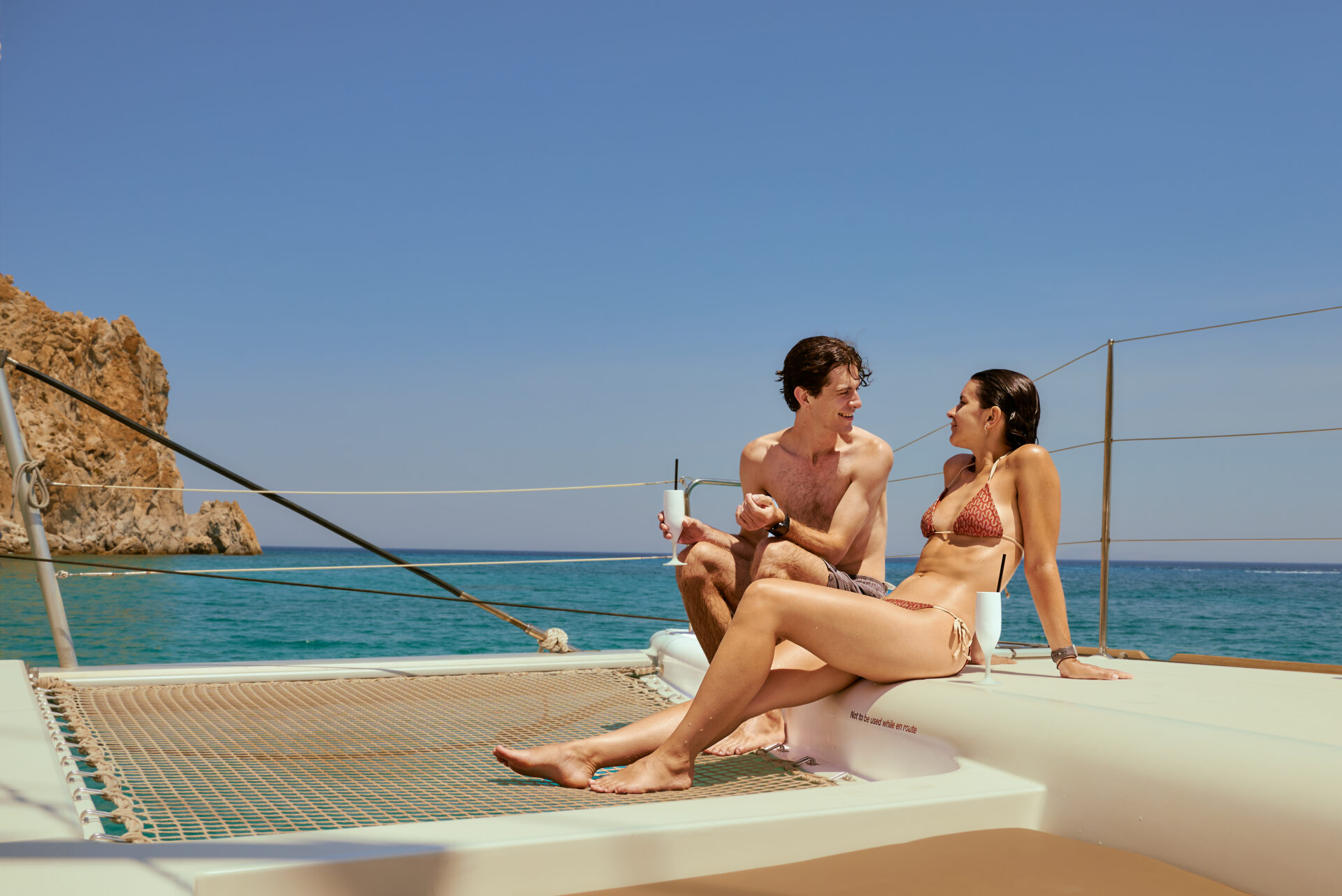
Early-summer sailing means long hours on deck in comfortable warmth, with none of the intensity that defines the peak-season heat.
If you have a full week on Crete in May or June, consider spacing two cruises across the trip. A morning route like Morning LUX from Kissamos early in the stay, and a more relaxed Bali Bay from Panormo later in the week. Two different coastlines, two different rhythms, and the calm conditions to enjoy both fully.
What About Late June And The Transition
Late June is still part of this sweet spot, though it sits closer to the edge. Temperatures begin climbing toward the high twenties, and by the final week some years the first hints of the meltemi can appear. That said, late June is still dramatically calmer and quieter than anything in July or August.
The real shift happens in the second week of July, when the meltemi establishes itself and tourist numbers reach their annual peak. Early summer gives you the version of Crete where every element is aligned in your favor.

Late-May and June sunsets over the Cretan Sea stretch past 20:30, giving sunset cruises an extended golden-hour window.
How To Lock In The Best Early-Summer Cruise
Because May and June are increasingly recognized as the best sailing window, the most popular routes and time slots do fill in advance. If you already know your travel dates, the smartest move is to reach out early and secure your preferred route before availability tightens.
- Share your travel dates, accommodation location, and group size with DanEri to get a route recommendation matched to your early-summer itinerary.
- Book early for May and June departures, especially for flagship routes like Morning LUX from Kissamos which fill quickly during this window.
- Consider pairing two different cruises across the week for guests staying seven days or longer on Crete.

Early-summer cruises deliver the full onboard experience exactly as intended: calm water, comfortable warmth, and unrushed hours on the sea.
Crete is beautiful all summer. But if you have the choice, May and June are the months where the island shows you everything it has without asking you to compromise on comfort, crowd levels, or sea conditions. That is what the calendar and the weather have been confirming, year after year.