You have seen the photos. The turquoise water, the white catamaran, the people lounging on the nets with drinks in hand. It looks effortless. But if you have never actually been on a catamaran cruise before, there is a part of your brain that keeps asking practical questions. What time do I actually need to be there? Will someone tell me where to sit? Is the food real food or just a token plate of fruit? Do I need to know how to swim?
This guide answers all of it. Not with marketing language, but with a straightforward hour-by-hour account of what a typical DanEri catamaran cruise in Crete looks like from start to finish. Whether you are booking the Morning LUX from Kissamos, the Semi-Private Balos cruise, or the Dia Island day trip from Heraklion, the rhythm of the day follows a similar shape. Here is what that shape looks like.
Written by Elena Markou for the DanEri Journal based on real cruise operations, crew routines, and guest feedback from the current 2026 season. All photos are from actual DanEri cruises.
Before You Board: Arriving At The Port
DanEri cruises depart from several ports across Crete depending on the route. Kissamos for Balos and Gramvousa. Heraklion for Dia Island. Panormo for Bali Bay. Whichever port you are heading to, the advice is the same: arrive fifteen to twenty minutes before the listed departure time.
You do not need to print anything. Your booking confirmation on your phone is enough. When you reach the dock, a crew member will greet you by name, check you in, and walk you onto the catamaran. There is no queue system, no wristband, no complicated boarding procedure. You step on, choose where you want to sit, and settle in.
If you are not sure which seat to choose, the front nets are the most popular spot for couples who want sun and breeze. The shaded rear deck is better for families or anyone who prefers staying out of direct sunlight. There is no wrong answer and you can move around freely all day.
The Safety Briefing And Sailing Out
Once everyone is on board, the captain gives a short safety briefing. It covers the location of life jackets, how to move safely on the nets, and what to do if you need help in the water. It takes about three minutes. It is calm, clear, and nobody treats it like a formality.
Then the engine hums, the lines come off the dock, and you pull away from port. This is usually the moment when first-timers relax for the first time. The harbor shrinks behind you, the coastline opens up, and the water starts changing color. Within ten minutes you are in open sea, and the day officially begins.

The first twenty minutes of open sailing are when most first-timers stop worrying and start enjoying.
The First Swim Stop: Where The Day Opens Up
Depending on the route, the first swim stop usually comes thirty to fifty minutes after departure. The captain anchors in a sheltered bay or lagoon, the crew lowers the swimming ladder, and the invitation is simple: get in whenever you are ready.
You do not need to be a strong swimmer. The water at most DanEri swim spots is shallow enough to stand in near the shore, and life jackets are available for anyone who wants one. Snorkeling masks are provided on board at no extra charge. Some guests jump straight in. Others ease down the ladder. A few stay on deck with a drink and watch the others, and that is perfectly fine too.
The swim stops typically last between thirty and forty-five minutes. Nobody rushes you. The crew keeps an eye on the water, refreshes drinks on deck, and lets you set your own pace.

Swim stops happen in sheltered bays with calm, clear water. Life jackets and snorkeling gear are always available.
Lunch On Board: Real Food, Not An Afterthought
One of the most common questions from first-timers is about the food. The answer is that lunch on a DanEri cruise is a proper sit-down meal, not a plastic tray. The menu varies by route and season, but it typically includes fresh salads, grilled proteins, local cheeses, bread, seasonal fruit, and Mediterranean sides prepared on board or sourced that morning.
Drinks flow throughout the day. Wine, beer, soft drinks, water, and juices are included depending on the cruise tier. On the LUX routes, you can expect a more refined selection with local Cretan wines and premium options. The crew serves everything. You do not need to line up or help yourself from a buffet station.

Lunch is served on deck with fresh, locally sourced ingredients. Drinks are included throughout the cruise.
Dietary Requirements
If anyone in your group is vegetarian, vegan, gluten-free, or has allergies, mention it when you book. The crew prepares adjusted meals in advance. This is not a special request that causes stress. It happens regularly and the kitchen handles it smoothly.
Water Sports And Afternoon Activities
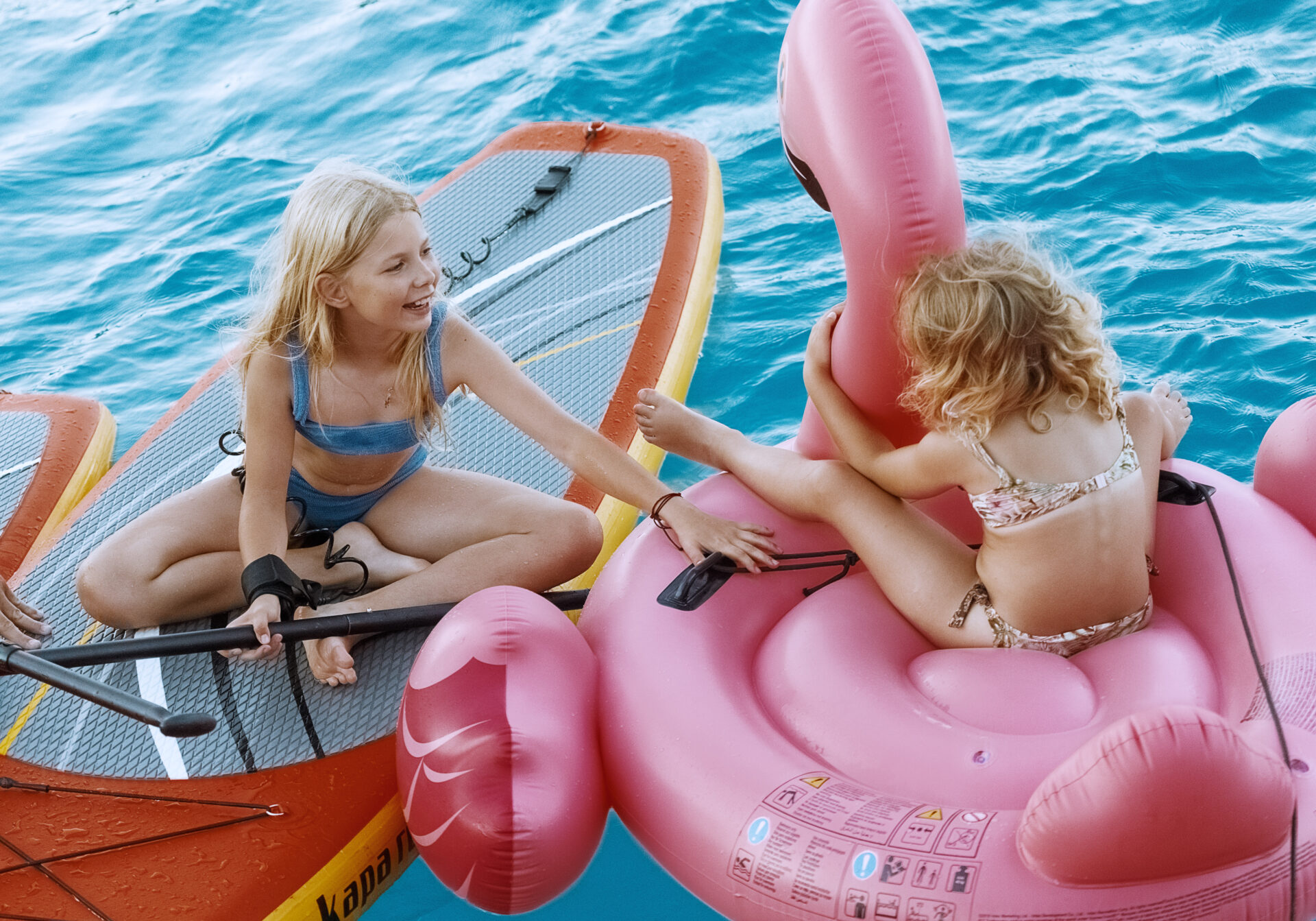
After lunch, most cruises include a second swim stop and the chance to try water sports. Depending on the route and catamaran, this can include stand-up paddleboarding, kayaking, and snorkeling at a different location. Equipment is on board and the crew sets everything up for you.
You do not need experience. The paddleboards are wide and stable. The kayaks are sit-on-top models that are almost impossible to flip. Crew members are happy to give quick pointers if you have never tried either before. Most guests who say they are not sporty end up spending thirty minutes on a paddleboard and wondering why they waited so long.

Stand-up paddleboarding and kayaking are included on most routes. No experience needed.
The Return Journey: Slower Than You Expect
The sail back to port is one of the quietest, most underrated parts of the day. The energy shifts. People stretch out on the nets, conversations go softer, and the light starts to change as the afternoon deepens. Some guests nap. Others sit at the bow and watch the coastline pass. The crew offers final drinks and lets the mood settle naturally.
Back at the dock, disembarkation is just as simple as boarding. The crew helps you off, you collect anything you brought on board, and the day is done. Most guests are back at their hotel within thirty to sixty minutes of stepping off the catamaran, depending on how far the port is from their accommodation.

The return sail is one of the calmest parts of the day. Most guests are back at their hotel within the hour.
What To Wear And What To Bring
This is where first-timers tend to overthink. The dress code is simple: wear what you would wear to a nice beach. Swimsuit, a light cover-up or T-shirt, sandals or flip-flops. You will be barefoot on the catamaran most of the day.
- Swimsuit worn under a cover-up or light clothing. You can change on board if needed.
- Sunscreen, sunglasses, and a hat. The Cretan sun is strong, even with the sea breeze.
- A light jacket or windbreaker if you are booking a sunset or late-afternoon cruise.
- Your phone and a waterproof pouch if you want to take photos in the water.
- Towels are provided on board. You do not need to bring your own.
- Leave valuables at the hotel. There is secure storage on board, but simplicity is better.
Packing too much. You need far less than you think. Swimsuit, sunscreen, phone, done. Everything else is already on the catamaran waiting for you.