

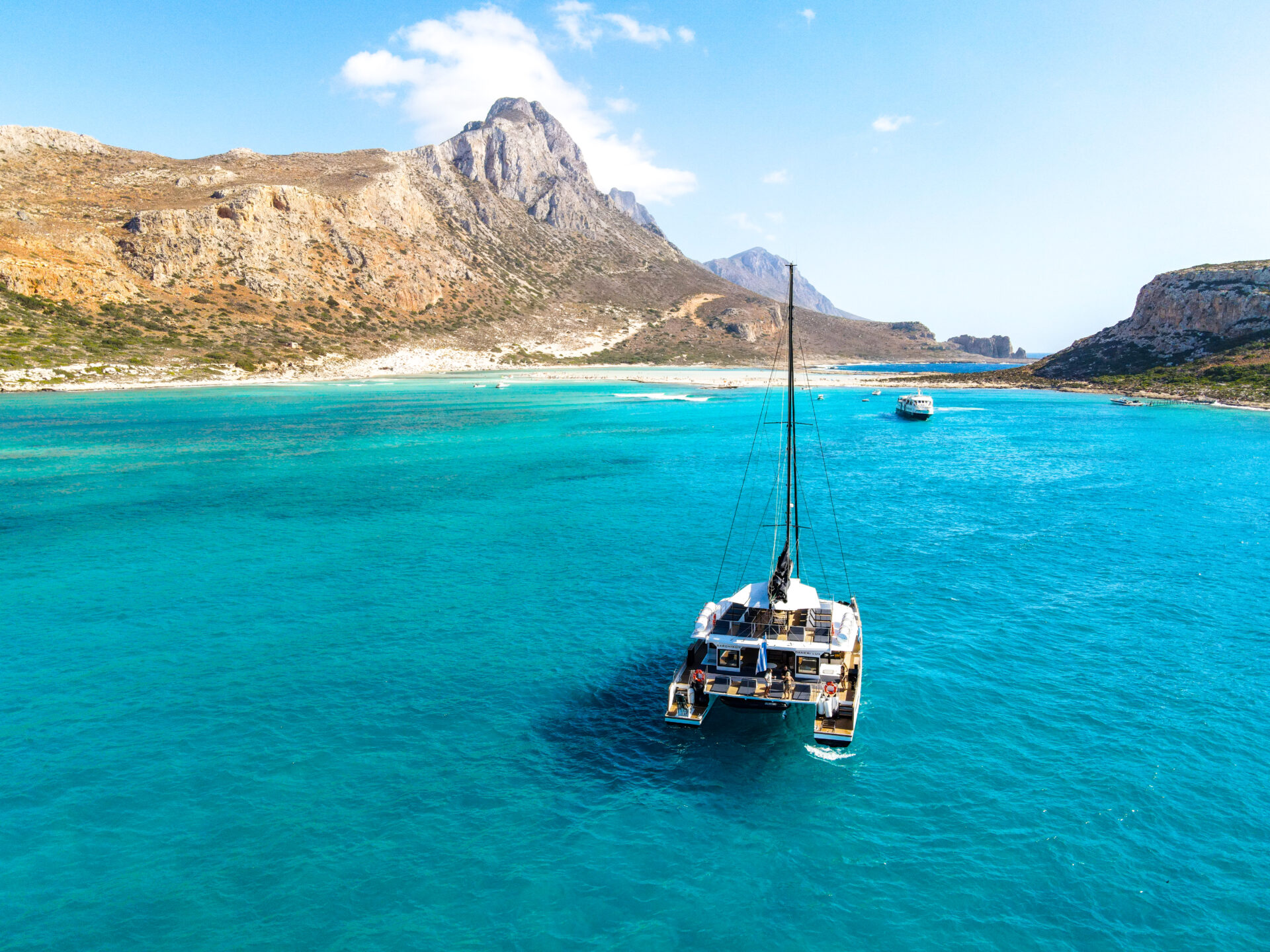
Gramvousa island sits at the very tip of the Gramvousa peninsula in northwest Crete, roughly two nautical miles offshore from Balos Lagoon. Almost everyone who visits this corner of the island comes for Balos. The lagoon photographs beautifully. It trends on social media. It earns its place on every Crete bucket list. But the island just across the water, the one crowned by a sixteenth-century Venetian fortress and flanked by a rusting shipwreck half-buried in sand, rarely gets the time it deserves.
That is what this guide is about. Not whether Gramvousa island Crete visit plans should include Balos. Of course they should. But rather why the fortress island itself warrants more than the forty-five minutes most organized tours allow, and how to structure a full day that gives both destinations the attention they have earned.
Written by Elena Markou for the DanEri Journal using current west-Crete cruise routes, active product pages, and DanEri imagery as of April 17, 2026. Every recommendation links to a real bookable cruise.
Gramvousa is not just a photo stop. The Venetian fortress hike, the shipwreck cove, and the panoramic summit views make it a genuine half-day destination. The smartest way to experience both Gramvousa and Balos without rushing either is by catamaran from Kissamos, which removes the ferry schedule pressure and lets you set the pace.
A Fortress Built to Guard the Sea Lanes
The Venetians built the fortress on Gramvousa in 1579, during a period when Ottoman expansion was threatening their control of the eastern Mediterranean trade routes. Crete was still a Venetian colony, and the northwestern tip of the island was considered a strategic chokepoint. Ships moving between the Adriatic and the Levant passed through these waters, and whoever controlled the headland controlled the passage.
The fortress sits at roughly 137 meters above sea level on a sheer rock plateau. The Venetians chose the site because the cliffs on three sides made it nearly impossible to assault from the sea. When the Ottomans finally took Crete in 1669, Gramvousa was one of the last three strongholds the Venetians managed to hold. It did not fall until 1692, more than two decades after the rest of the island had changed hands.

The fortress walls have endured more than four centuries of wind, siege, and sea salt. Walking among them is walking through layers of Mediterranean conflict.
Later, during the Greek War of Independence in the 1820s, Cretan rebels and refugees occupied the fortress and used it as a base of operations. For a brief period, Gramvousa became an unofficial pirate stronghold, with ships raiding Ottoman and neutral vessels in the surrounding waters. That chapter ended when the British intervened and the fortress was handed over to the new Greek state, but the pirate history still clings to the island like sea spray.
The Shipwreck That Anchors the Shoreline
At the base of Gramvousa, half-buried in the shallow sand of a small cove, sits the rusted hull of a ship that ran aground decades ago. It is not as large or dramatic as the famous Navagio wreck in Zakynthos, but it has its own quiet power. The iron is stained deep orange. The sand around it shifts with the seasons. Depending on the tide and the time of year, you can wade right up to it or photograph it from a few meters away with the fortress looming above.
The Gramvousa shipwreck sits in shallow turquoise water at the base of the island, a quiet counterpoint to the fortress above.
For most visitors arriving by ferry, this cove is where they spend their limited Gramvousa time. They take photos of the wreck, dip their feet in the water, and then face the decision: climb to the fortress or head back to the boat for Balos. With a standard ferry schedule, there is usually not enough time for both. That is the core problem with the typical Gramvousa island Crete visit, and it is the reason a catamaran cruise changes the equation entirely.
The Hike to the Fortress Top
The trail from the landing area to the fortress summit takes roughly 20 to 30 minutes, depending on your pace and the heat. It is not a technical hike. There is no scrambling or exposure. But it is steep, the path is rocky and uneven in places, and there is almost no shade. In midsummer, the sun is relentless. Good shoes, water, and a hat are not optional.
What you gain for the effort is one of the most extraordinary viewpoints in all of Crete. From the fortress walls, you can see Balos Lagoon spread out below to the southeast, the open sea stretching north toward the Peloponnese, and the rugged spine of the Gramvousa peninsula curving back toward the Cretan mainland. On a clear day, the visibility extends for dozens of kilometers in every direction.

From the fortress summit, the entire geography of northwest Crete unfolds. Balos Lagoon glows below, and the peninsula stretches toward the mainland.
Inside the fortress itself, you can explore the remains of Venetian barracks, cisterns, and defensive walls. There is a small chapel, partially restored, and several vaulted chambers that still hold their shape after more than four centuries. The stonework is rough, weathered, and completely authentic. There are no gift shops, no ticket booths, and no guardrails. It is one of the few significant Venetian sites in Crete that still feels genuinely untouched.
Why Most Visitors Miss the Best Part
The standard ferry from Kissamos port gives passengers about an hour on Gramvousa before continuing to Balos. For anyone who wants to swim at the shipwreck cove and hike to the fortress, that is simply not enough time. You end up rushing the climb, skipping the interior exploration, or abandoning the hike entirely to make sure you are back at the landing when the boat departs.
This is exactly the problem a private or semi-private catamaran cruise solves. When you are not locked to a ferry timetable, you can spend a full hour at the fortress, swim at the shipwreck, and then sail to Balos at your own pace. The catamaran anchors where you want, leaves when you are ready, and eliminates the stress of watching the clock while standing on a four-hundred-year-old battlement.
Combining Gramvousa and Balos the Right Way
The ideal Gramvousa island Crete visit combines the fortress island with Balos Lagoon in a single day, but in a way that gives each destination genuine breathing room. That means arriving at Gramvousa first, while energy levels are high and the morning light hits the fortress walls. Spend 60 to 90 minutes exploring the summit, photographing the views, and swimming at the cove. Then sail the short distance to Balos for the afternoon, when the lagoon water is warmest and the light is at its most photogenic.
The short sail from Gramvousa to Balos takes only minutes by catamaran, but the shift in landscape feels like entering a different world.
This is the route logic that DanEri's west-Crete cruises are built around. Both the Morning LUX from Kissamos and the Semi-Private Balos and Gramvousa cruise include time at both destinations, with the catamaran acting as your private shuttle between them. There is no queue, no crowd management, and no loudspeaker telling you when to return to the dock.
Why a Catamaran Gives You Both Balos and Gramvousa
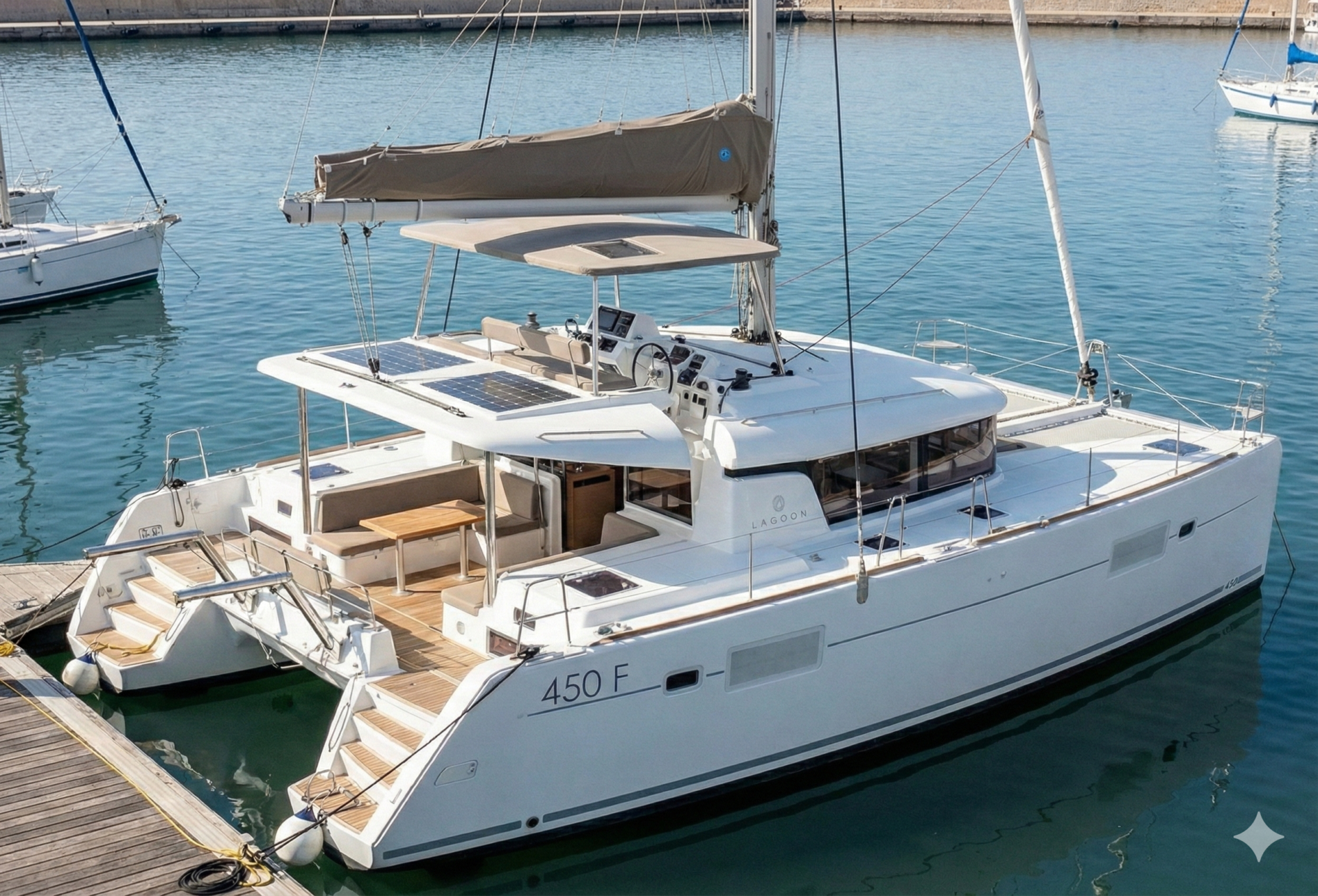
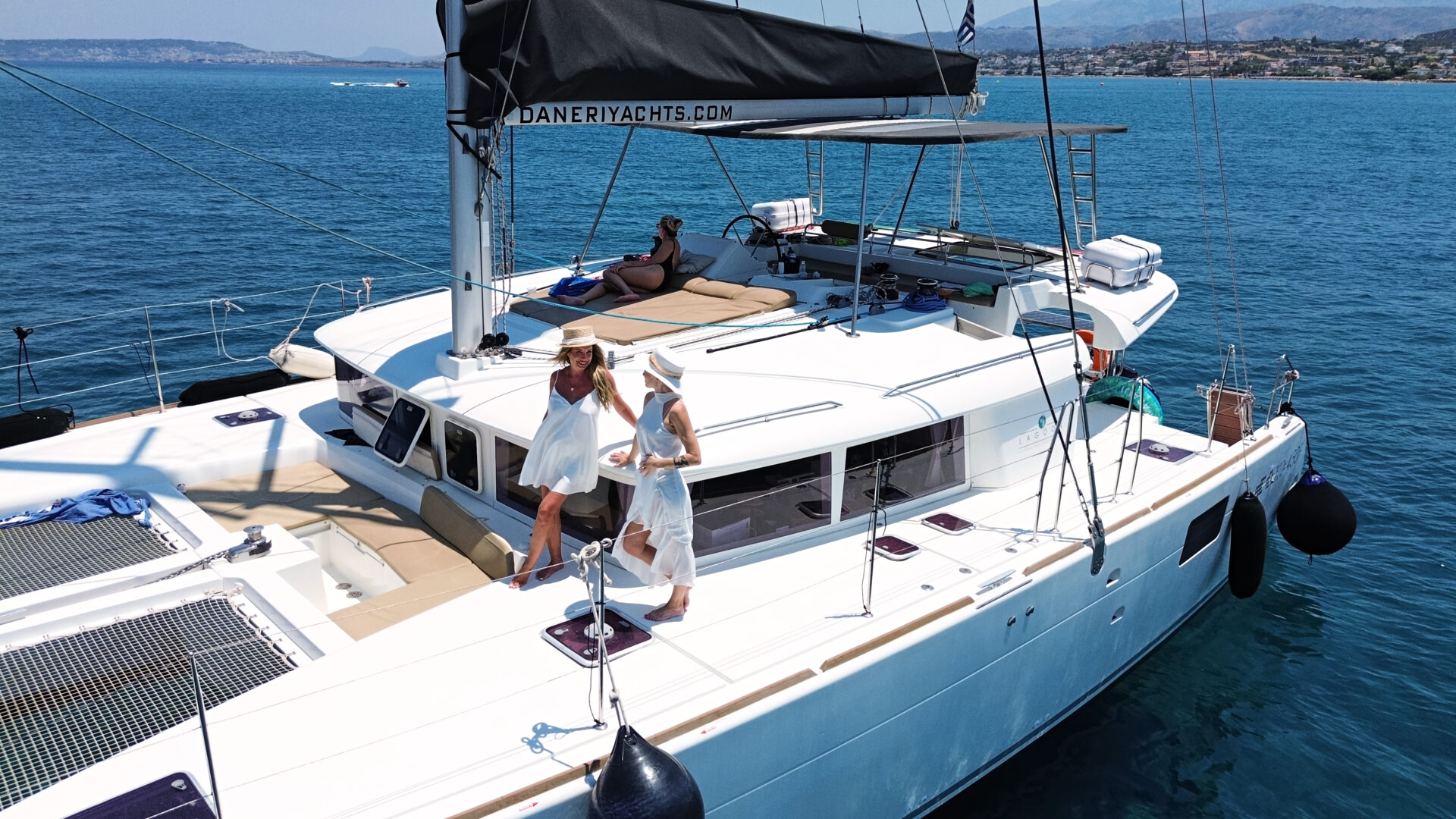
The catamaran advantage is not just about comfort, although the onboard experience, with food, drinks, and swimming platforms, is significantly better than what a ferry offers. The real advantage is flexibility. A catamaran cruise lets you structure the day around the two destinations instead of fitting the destinations into someone else's schedule.

Anchored off Gramvousa, the catamaran becomes your floating base. Swim from the deck, explore the island, and return when you are ready.
- Arrive at Gramvousa before the ferry crowds reach the island, giving you quieter access to the fortress trail and the shipwreck cove.
- Spend as long as you want at each stop. If the fortress captivates you, stay longer. If Balos is calling, sail over early.
- Swim directly from the catamaran in spots the ferries cannot reach, including sheltered coves along the peninsula.
- Enjoy a full meal and drinks on board without needing to find a taverna or pack a cooler.
- Return to Kissamos at a civilized hour instead of being locked to the last ferry departure.
For guests who have traveled to west Crete specifically to see this corner of the island, the difference between a ferry visit and a catamaran day is the difference between checking a box and actually experiencing the place. Gramvousa is not a fifteen-minute photo opportunity. It is a destination with depth, history, and physical beauty that rewards the time you give it.

The catamaran experience turns the logistics of a two-destination day into something effortless and genuinely luxurious.
What to Bring and When to Go
The best months for a Gramvousa island Crete visit are May through early October. June and September tend to offer the strongest balance of warm water, manageable heat, and lower crowd density. July and August are the busiest, and the fortress hike in peak summer heat demands respect.
- Wear sturdy shoes with grip. The fortress trail is rocky and can be slippery in spots.
- Bring sun protection: hat, sunscreen, and plenty of water. There is no shade on the climb.
- Pack a swimsuit and a towel. The shipwreck cove is swimmable and the catamaran offers direct water access throughout the day.
- Bring a camera with good zoom. The aerial views from the summit are extraordinary, and the fortress details reward close-up photography.
Whether you are a history enthusiast drawn to Venetian military architecture, a photographer chasing the contrast between ancient stone and turquoise sea, or simply a traveler who wants more than the standard Balos ferry loop, Gramvousa delivers. Give it the full day. You will not regret it.