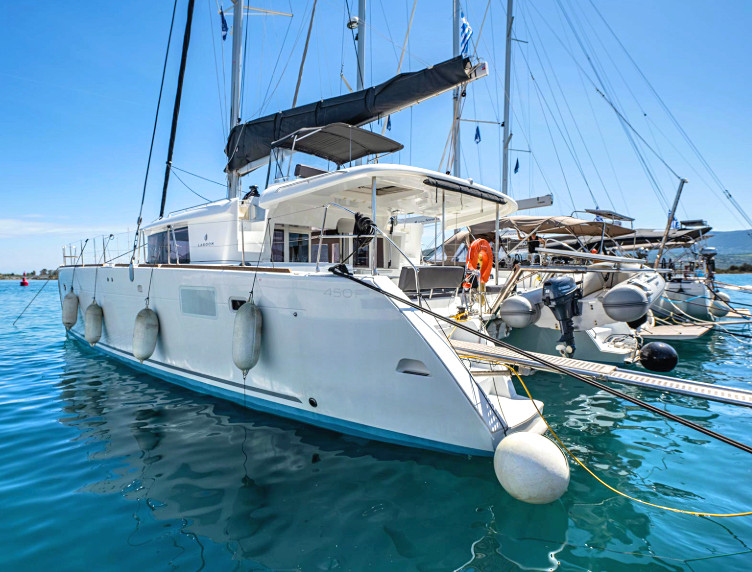
There are places where history feels like something you read about, and then there are places where history meets you at the waterline. Spinalonga is the second kind. A small, fortified island sitting at the mouth of Elounda Bay in east Crete, it has been a Venetian stronghold, an Ottoman outpost, and one of Europe's last active leper colonies. Today it is one of the most visited archaeological sites in Greece, and the most powerful way to reach it is not by crowded public ferry but by catamaran, with the morning light still low and the bay almost entirely to yourself.
An Spinalonga island tour Crete by catamaran reframes what is usually a rushed, ticket-queue experience into something that feels genuinely personal. You arrive before the big groups. You leave with time to swim. And between those two moments, you walk through centuries of human resilience compressed into a single rocky headland barely three hundred metres long.
Written by Elena Markou for the DanEri Journal using the current east-Crete cruise collection, active route pages, and DanEri imagery as of April 17, 2026.
The Venetian Fortress That Refused to Fall
Spinalonga's military chapter begins in 1579, when the Venetians carved a fortress into the rock to guard the entrance to the natural harbour at Elounda. The position was extraordinarily effective. While the rest of Crete fell to Ottoman forces in 1669 after one of the longest sieges in history, Spinalonga held out for another 46 years, finally surrendering in 1715. The walls you walk past today still carry that defiance. Arrow slits face every approach. Bastions rise from the waterline as though the island itself decided to become a weapon.
For visitors arriving by catamaran from Agios Nikolaos, the fortress reveals itself slowly. First a grey smudge against the eastern hills, then a line of crenellations, then the full silhouette standing against the Cretan sky. That slow reveal is part of why the catamaran approach works so well. Public ferries from Elounda cross a narrow channel in minutes. A catamaran from Agios Nikolaos gives you the wider bay, the changing light, and the sense of arriving at a place that earned its isolation.
The Venetian fortifications of Spinalonga have guarded the entrance to Elounda Bay since 1579.
The Leper Colony: A Chapter Most Visitors Never Forget
After the Ottomans left, Spinalonga entered its most emotionally complex era. In 1903, the Cretan authorities designated the island as a leper colony. Patients from across Greece were sent here, many of them against their will, to live in the abandoned Ottoman settlement within the fortress walls. At its peak the colony held over 400 residents. They built a community. They opened shops along the main street. They married, argued, celebrated name days, and watched the mainland lights from windows that had once held cannons.
The colony closed in 1957, making Spinalonga one of the last active leprosaria in Europe. Walking the main street today, you pass roofless houses with faded blue door frames, a small church, the remains of a hospital, and a disinfection tunnel that new arrivals were forced to walk through on the day they arrived. It is not a comfortable walk, and it is not supposed to be. But it is one of the most genuinely moving experiences available to anyone visiting Crete.

The main street of the former colony still holds the quiet weight of the community that lived here until 1957.
Victoria Hislop and the Novel That Changed Everything
Spinalonga was already well known to Greeks, but it became an international destination largely because of one book. Victoria Hislop's 2005 novel The Island tells the story of a young woman who discovers that her family's history is tangled with the leper colony. The novel spent years on bestseller lists across Europe, was adapted into a Greek television series that drew record audiences, and turned Spinalonga from a niche historical site into one of the most searched destinations in the eastern Mediterranean.
Many guests who book a Spinalonga morning cruise from Agios Nikolaos mention the novel as the original reason the island appeared on their list. What surprises them is how faithfully the real place matches the atmosphere Hislop described. The tunnel entrance. The main street climbing toward the fortress summit. The view back toward Plaka village on the mainland. These are not loosely inspired settings. They are real locations you can stand inside, and the emotional charge is exactly as strong as the book suggests.
The view from Spinalonga back toward the mainland is one of the moments that stays with visitors long after they leave.
Combining History With Swimming: The Morning Route
The best Spinalonga island tour Crete itinerary does not end at the fortress gate. It continues on the water. After the island visit, the catamaran moves to the sheltered coves and swimming spots along the eastern coastline, where the water shifts between shades of turquoise that do not look entirely real. This is where the emotional weight of the morning lifts, and the day pivots from reflection to simple physical pleasure.
The contrast is what makes this route so satisfying. You spend the first half of the morning inside one of Europe's most affecting historical sites. Then you spend the second half floating in water so clear that you can count the pebbles three metres below your feet. Very few single-morning experiences in Crete deliver both ends of that emotional range.
Spinalonga receives most of its daily visitors between 11:00 and 14:00, when the Elounda ferry boats run at full capacity. A catamaran departure from Agios Nikolaos puts you on the island before the peak wave, giving you quieter paths, better photographs, and more breathing room inside the narrow streets of the colony.
The Kolokitha Beach Stop
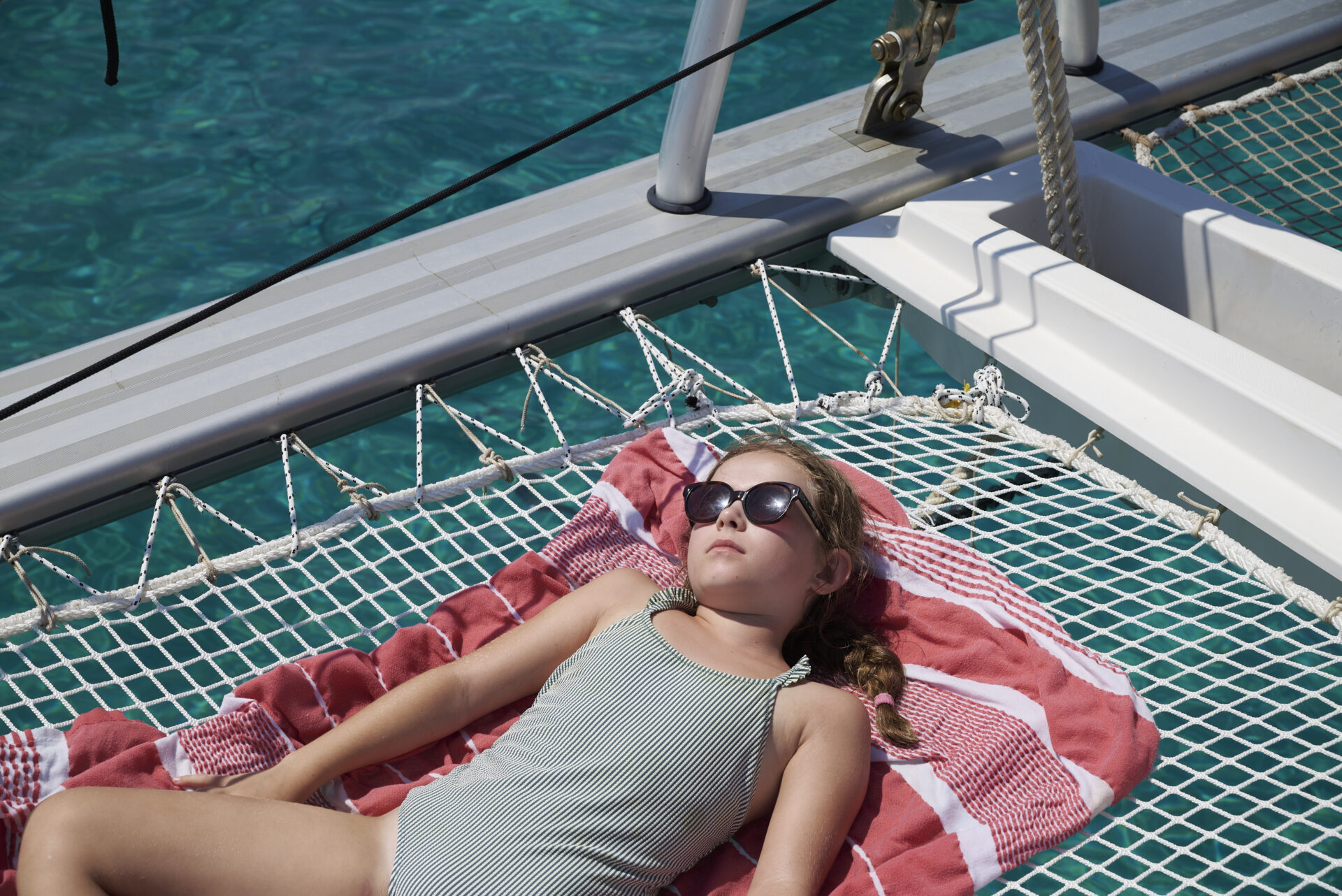
One of the highlights that most first-time visitors do not expect is the Kolokitha beach stop. Located on the peninsula directly opposite Spinalonga, Kolokitha is a sheltered, sandy-bottomed bay that is difficult to reach by road but perfectly positioned for a catamaran stop. The water here is shallow, warm, and impossibly clear. For families with children, it is the part of the day that often gets mentioned first at dinner.
Kolokitha beach, sheltered and shallow, is the perfect counterpoint to the fortress visit earlier in the morning.
Why a Catamaran Beats the Public Ferry
The standard way to visit Spinalonga is by small public ferry from Elounda or Plaka. Those boats run frequently, they are affordable, and they get the job done. But the experience is fundamentally different from arriving by catamaran, and the differences matter more than most guests expect before they go.
- The public ferry crosses a short channel and deposits you at the island gate with no swimming, no food, and no onboard time. A catamaran cruise includes the island visit, swimming stops, a full meal, and drinks as part of a single seamless morning.
- Ferry visitors arrive in concentrated waves and compete for shade, photo spots, and path space inside the colony walls. A catamaran from Agios Nikolaos approaches from a different angle and often docks before the main ferry rush begins.
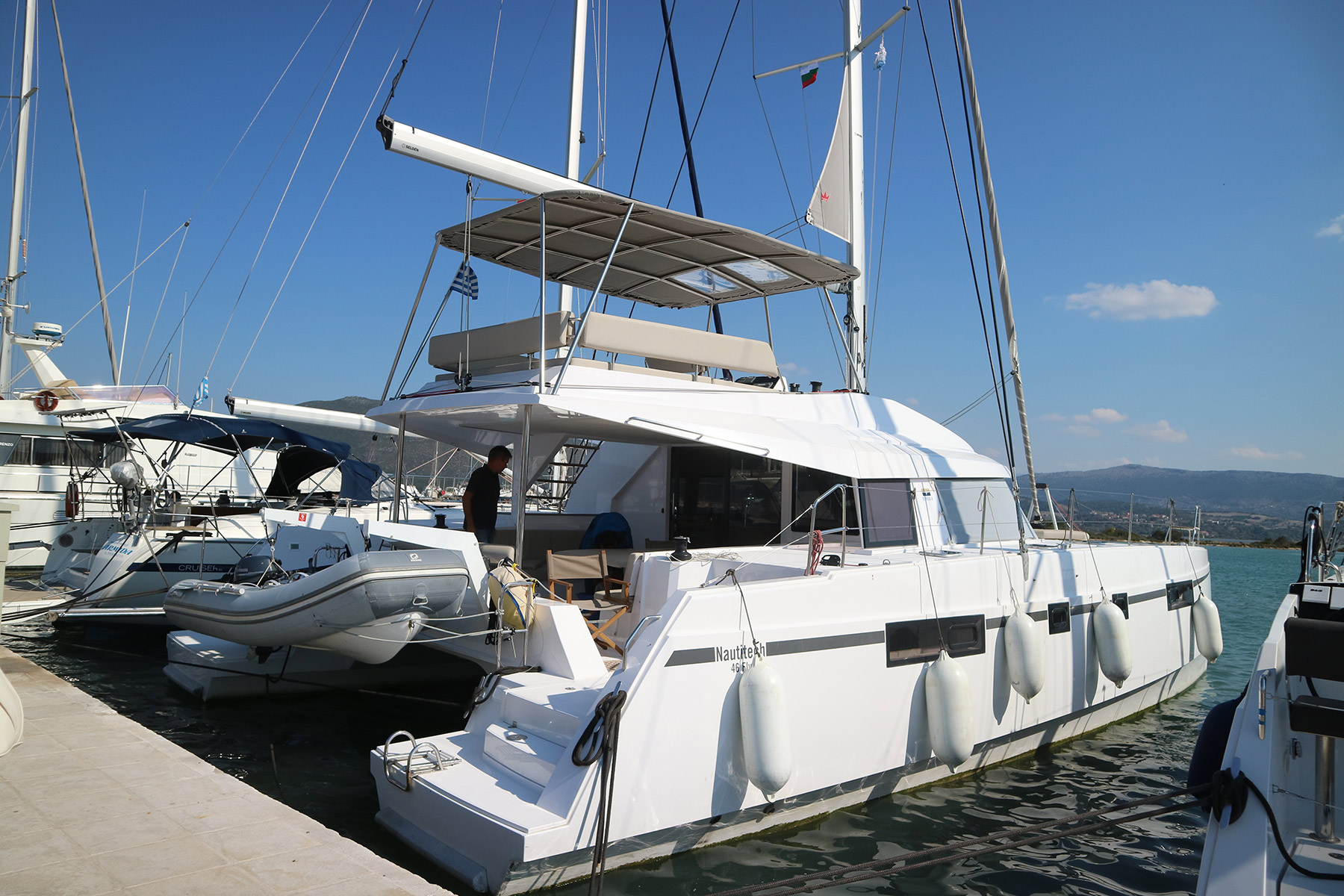
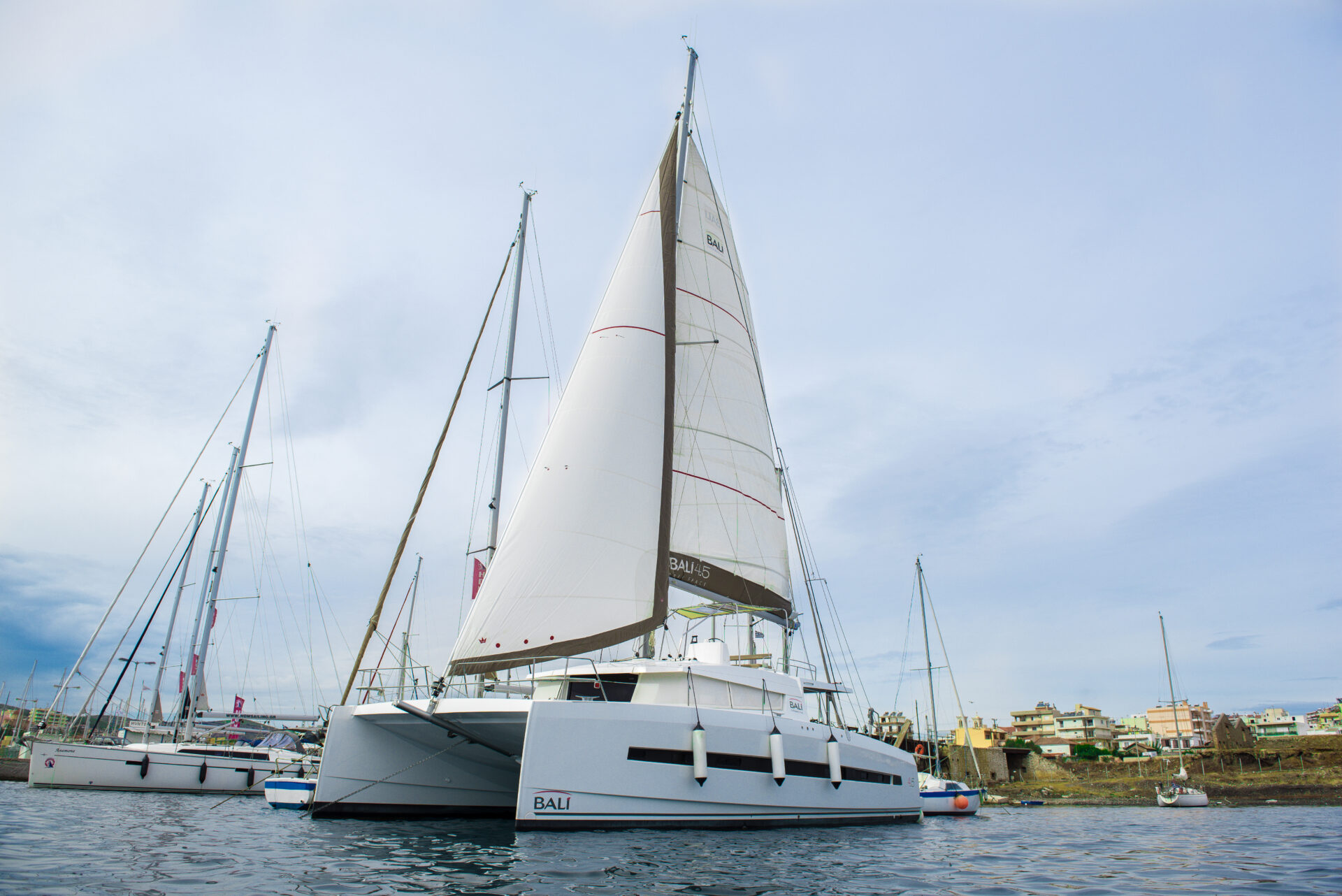
- The ferry return to Elounda takes a few minutes. The catamaran return includes a coastal sail past headlands and coves that most visitors never see because they are not accessible from the road.
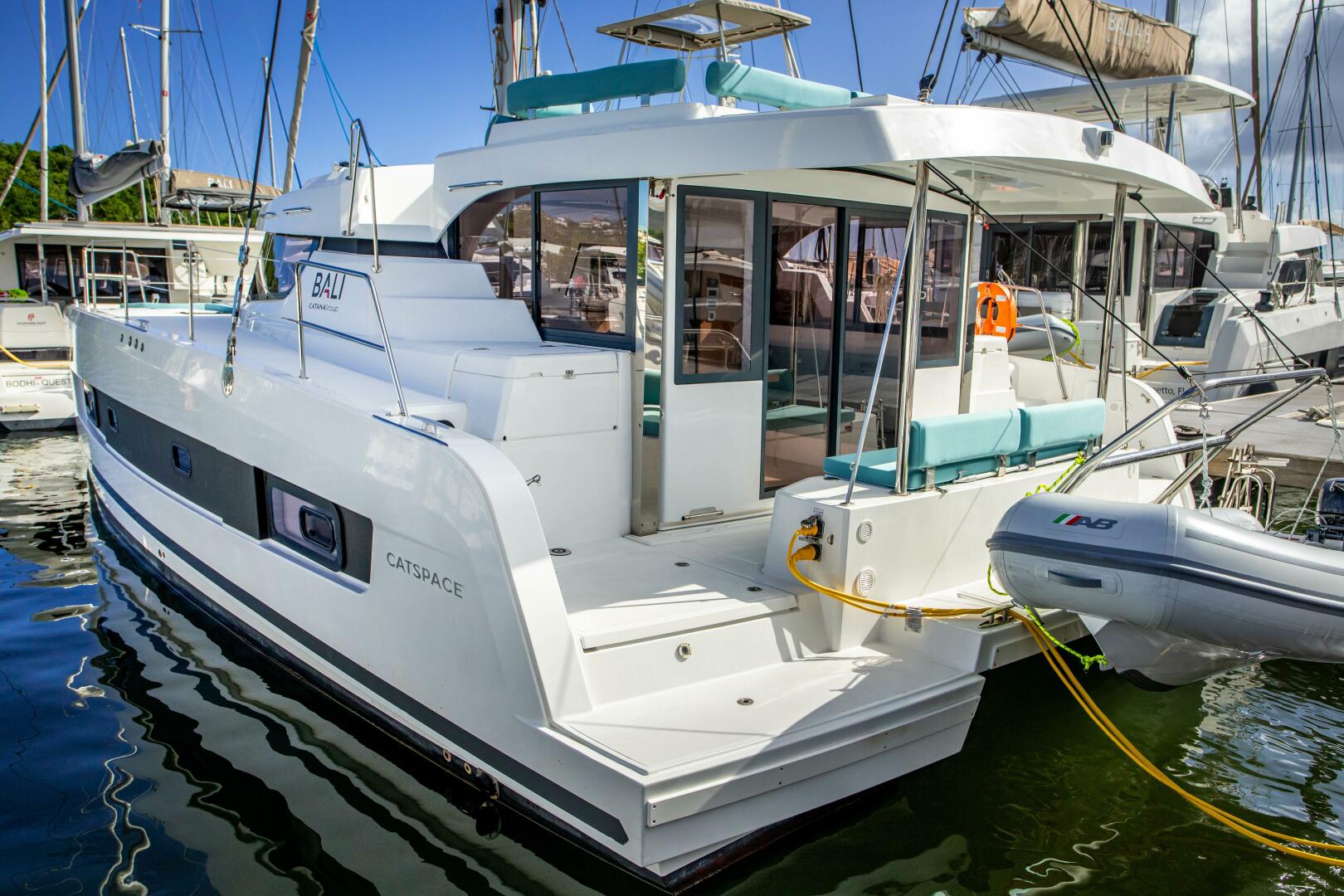
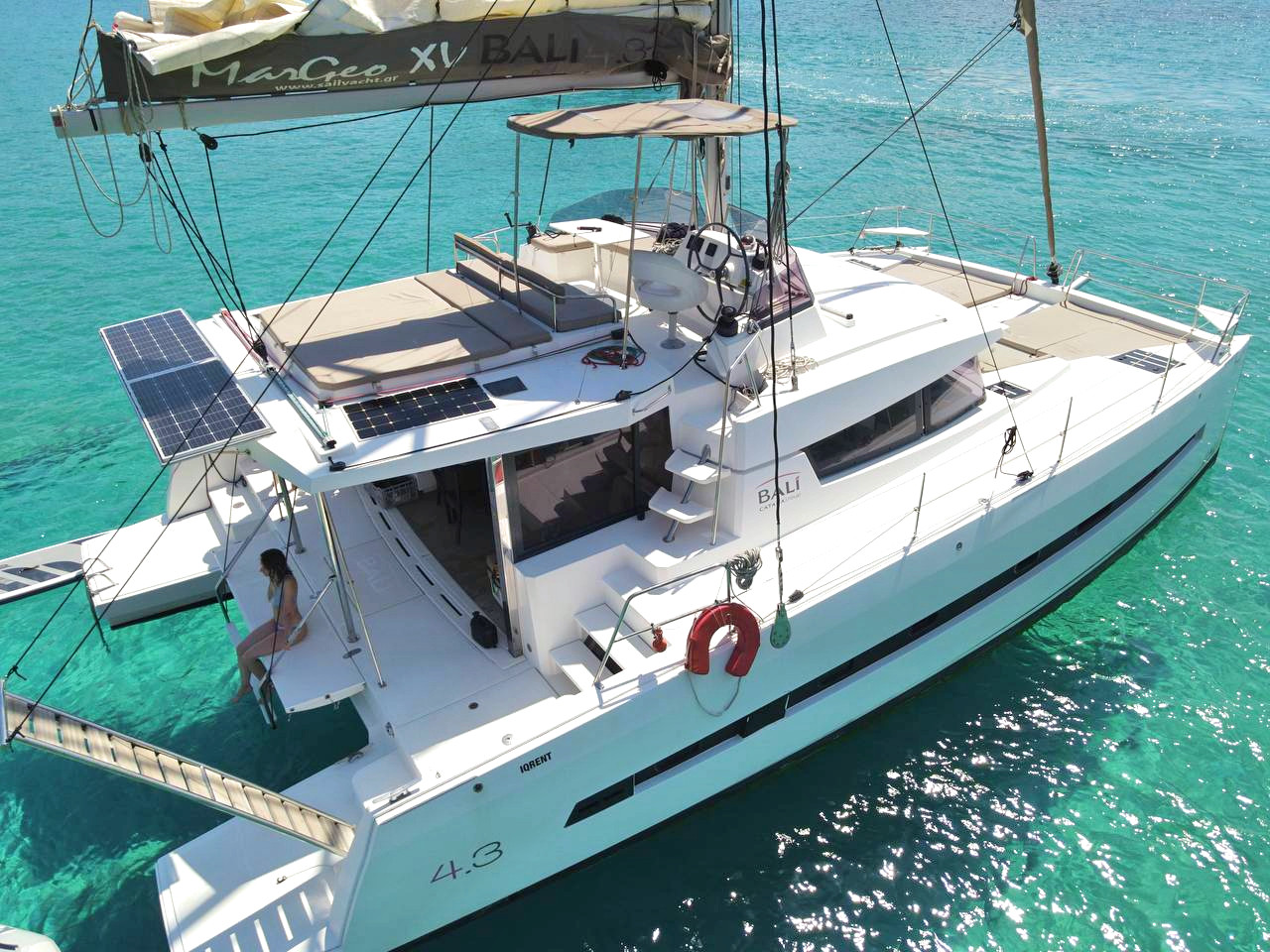
- On a catamaran you have a dedicated crew, shaded deck space, fresh towels, and the freedom to swim off the stern. On the ferry, you have a bench and a ticket stub.
None of this means the public ferry is a bad option. For travellers on a tight budget or a very short schedule, it works. But for guests who want the Spinalonga visit to feel like a highlight rather than a logistics exercise, the catamaran morning cruise is a different category of experience entirely.
The catamaran route from Agios Nikolaos follows the eastern coastline, passing headlands and coves that road-based visitors never see.
What to Expect on the Day
A typical Spinalonga morning cruise from Agios Nikolaos departs early, usually around 09:00. The sail to the island takes roughly 45 minutes, during which the crew serves coffee, juice, and light snacks while the coastline unfolds to starboard. On arrival at Spinalonga, you disembark for a guided or self-guided walk through the fortress and colony ruins. Most guests spend 60 to 90 minutes on the island.
After the island visit, the catamaran moves to the swimming zone. Depending on conditions, this may include Kolokitha, the sheltered waters off the Spinalonga channel, or a quiet cove along the peninsula. A full meal is served on board during or after the swim stop. The return to Agios Nikolaos typically lands before 14:00, leaving the rest of the afternoon free.

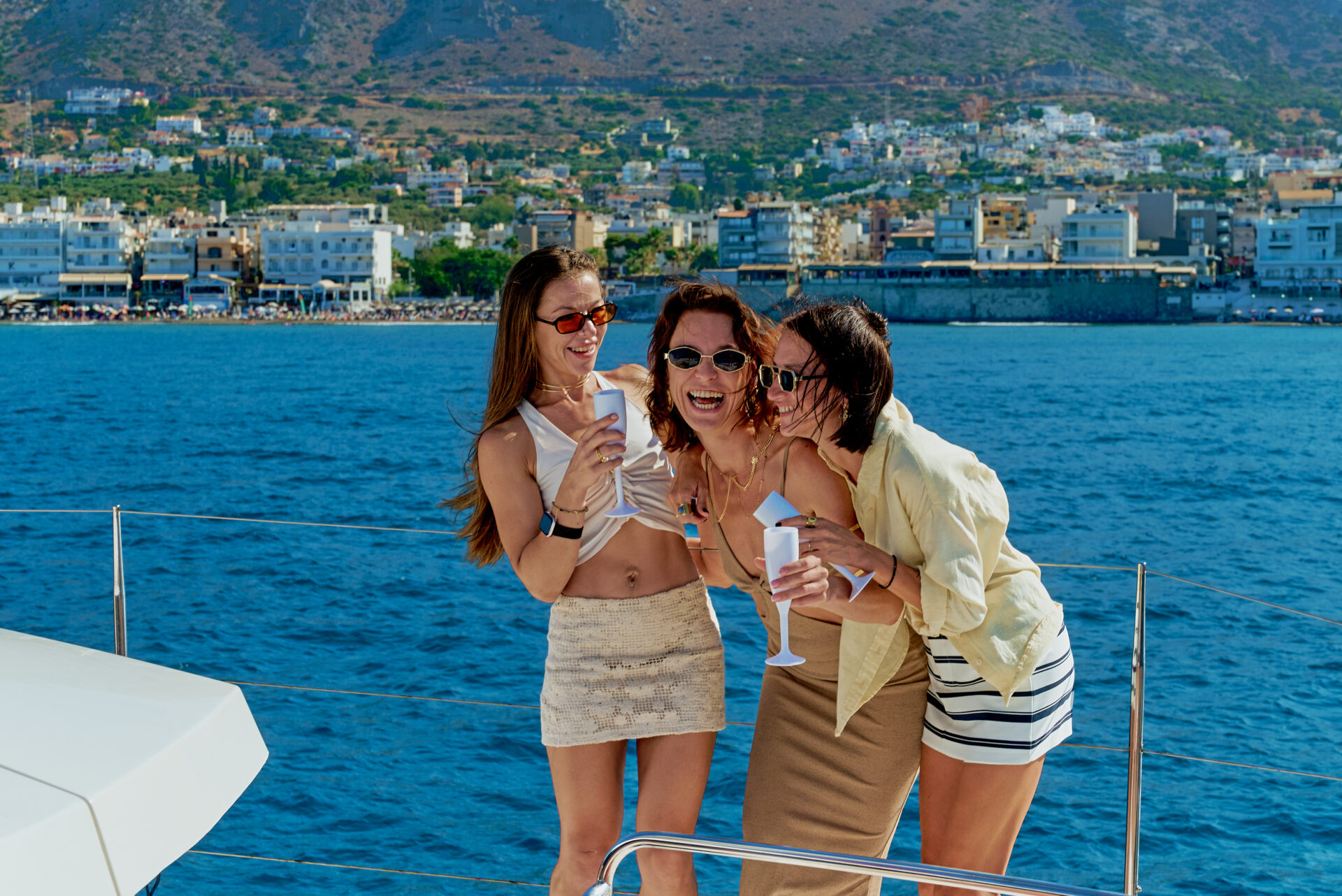
After the fortress visit, the mood shifts to swimming, food, and open-water relaxation on the return sail.
This shape is what makes the Spinalonga morning cruise such an efficient use of a holiday day. You do not sacrifice an entire day to one activity. You get the historical visit, the swimming, the food, and the sailing all compressed into a single morning arc, and you are back in town with energy and daylight to spare.