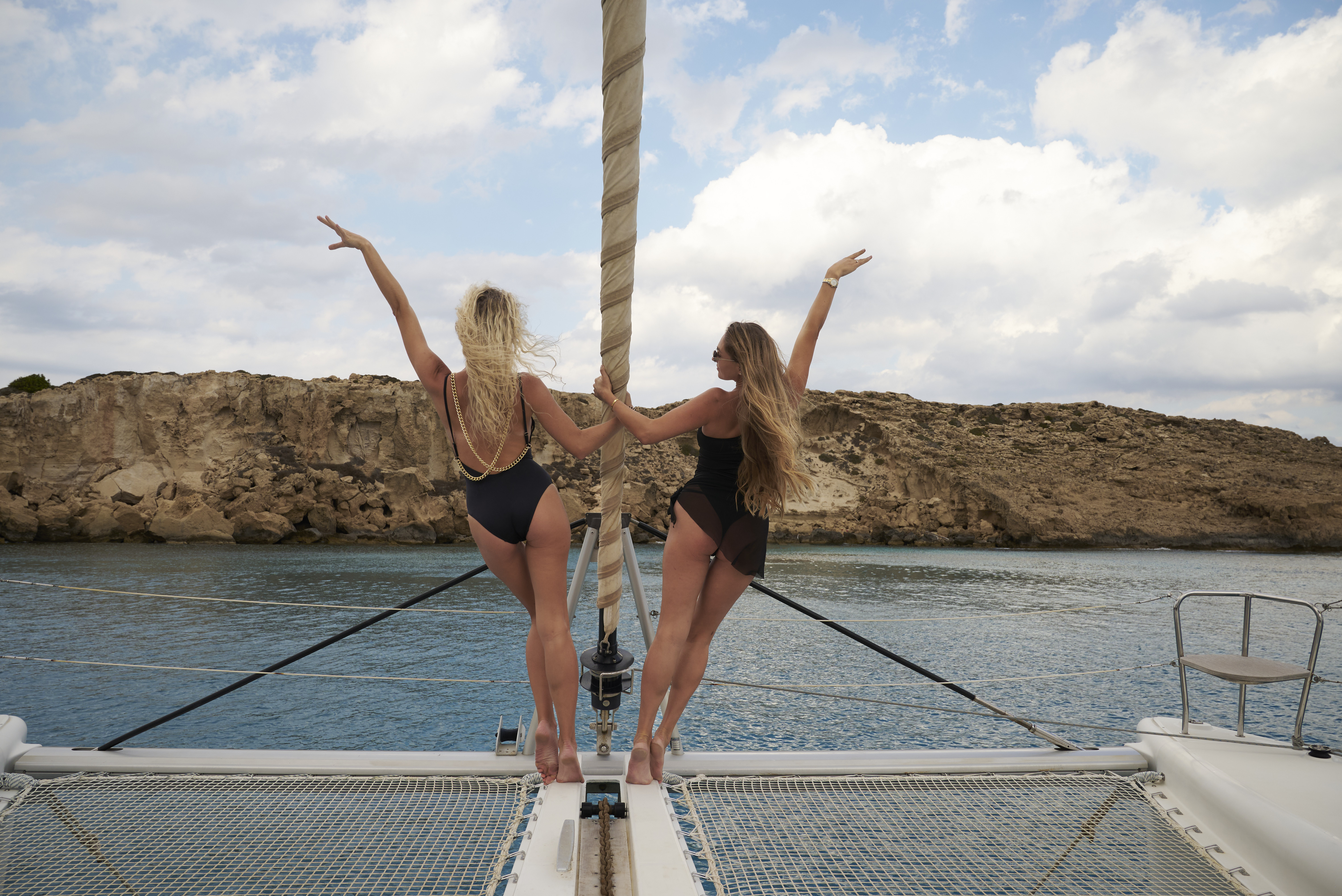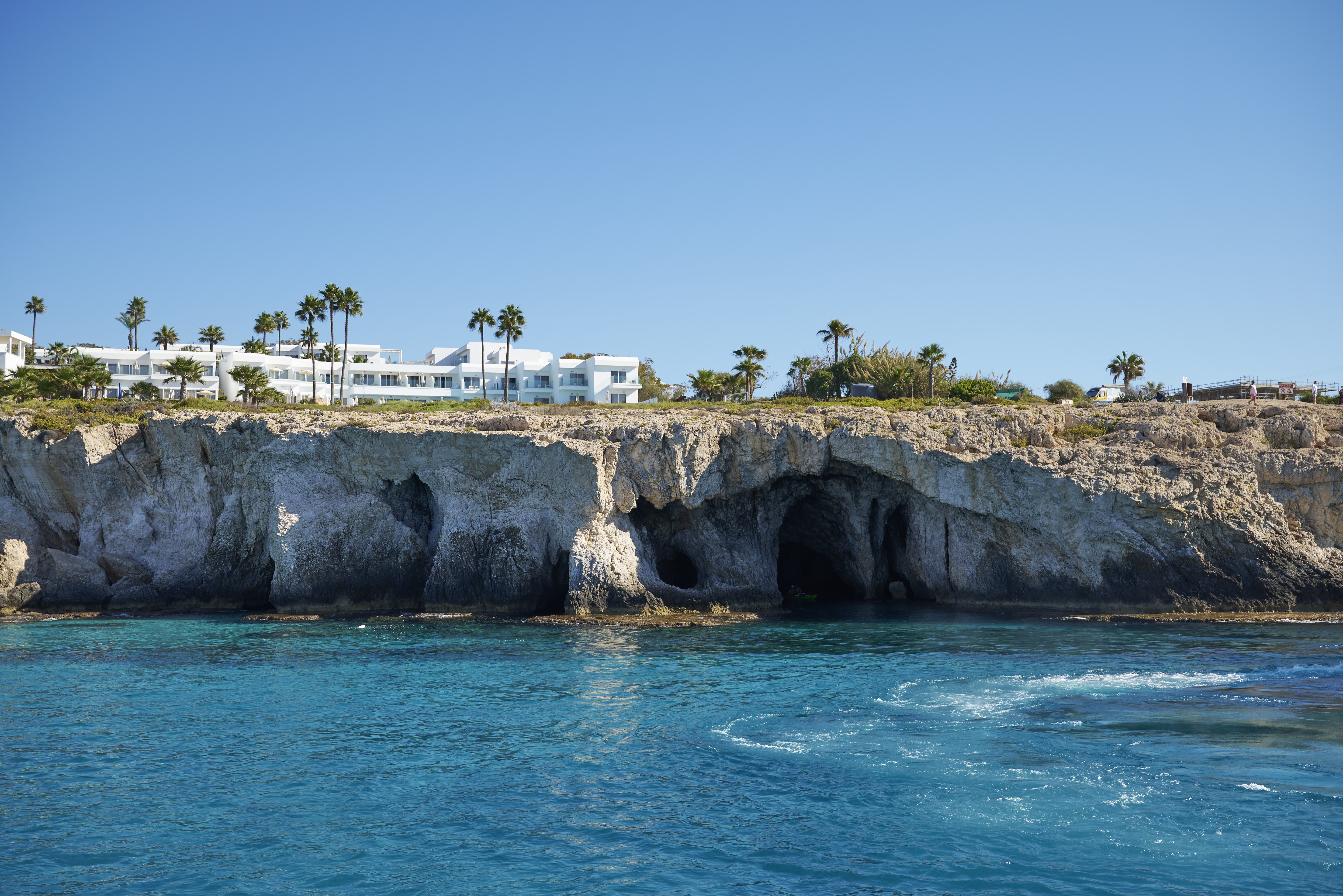
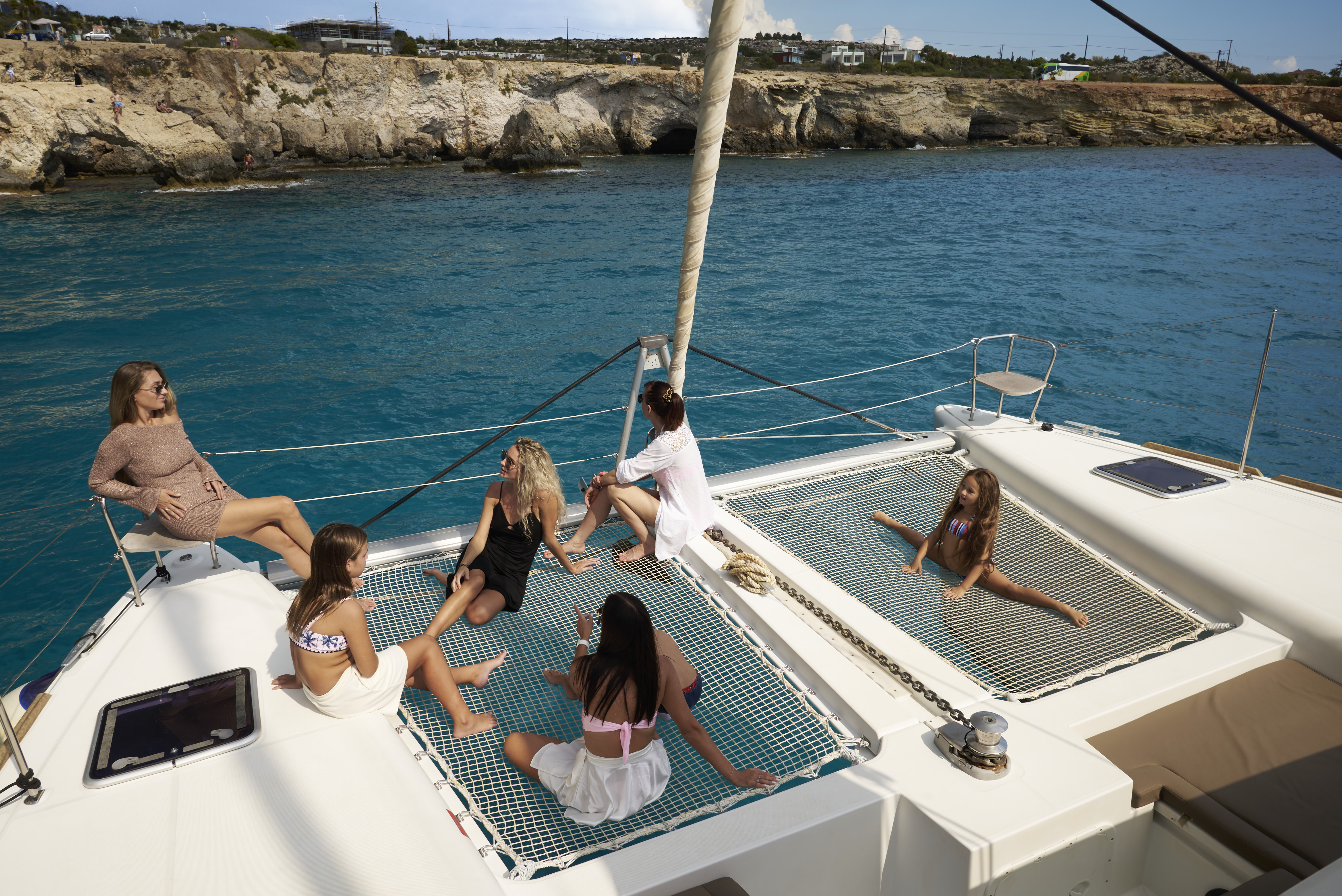
Cyprus sits in the far southeastern corner of the Mediterranean, where the sea has the whole basin’s summer behind it — and it shows. Of all the islands DanEri sails, Cyprus has the warmest water and by far the longest season: the sea passes 21°C in May and doesn’t drop back below 20°C until December. The shallow eastern bays around Ayia Napa and Protaras warm up like a lagoon, and the best of it — the Blue Lagoon and the sea caves of Cavo Greco — is at its best from the deck of a boat. Here is what to expect, month by month.
The sea around Cyprus is warmest in August at about 28°C (82°F), with July and September just behind at 27°C. It’s comfortable for swimming from May to November and still swimmable in early December at around 20°C. The coldest water is in February and March at about 17°C (63°F). Cyprus is the warmest of DanEri’s islands — roughly two degrees above Crete and Rhodes at the peak — and September is the sweet spot.
Cyprus sea temperature, month by month
Tap any month to see how warm the water is and whether it’s a swimming month.
Written for the DanEri Journal using long-term sea-surface-temperature averages for the eastern Mediterranean around Cyprus, cross-checked against what our crews record at the swim stops through the season. Figures are typical monthly averages and vary a little year to year and between the shallow eastern bays and the deeper west coast.
Cyprus Sea Temperature Month by Month
These are the typical average sea-surface temperatures around Cyprus. The island sits in the warmest corner of the Mediterranean, so the sea both warms earlier and cools later than anywhere else DanEri sails — and as everywhere, the warmest water arrives in August and September, because the sea spends all summer absorbing heat and releases it slowly.
| Month | Avg sea temp | °F | Swimming verdict |
|---|---|---|---|
| January | 18°C | 64°F | Cool — brief dips; the mildest winter sea of the four islands |
| February | 17°C | 63°F | Coldest of the year — wetsuit weather |
| March | 17°C | 63°F | Cold — the sea hasn’t caught up with spring yet |
| April | 19°C | 66°F | Cool — brave swimmers only, keep it short |
| May | 21°C | 70°F | Refreshing — the season opens; comfortable by late May |
| June | 25°C | 77°F | Warm — easy all-day swimming already |
| July | 27°C | 81°F | Hot — bathwater-warm in the shallow eastern bays |
| August | 28°C | 82°F | Warmest — the warmest sea in this part of the Mediterranean |
| September | 27°C | 81°F | Hot — the sweet spot: hot sea, softer sun, thinner crowds |
| October | 25°C | 77°F | Warm — still a proper swimming month end to end |
| November | 22°C | 72°F | Comfortable — the longest season in the region rolls on |
| December | 20°C | 68°F | Refreshing — locals still swim; brief dips for everyone else |
What Counts as “Warm Enough”?
Comfort is personal, but there’s a rough scale most swimmers agree on. Below about 18°C the sea is bracing and you won’t linger without a wetsuit. From 19 to 21°C it’s refreshing — fine for a swim, but a rash vest extends your comfort if you’re snorkelling. From 22°C it’s genuinely comfortable, and from 24°C it’s warm enough to stay in as long as you like — which on Cyprus is the case for five full months, from June right through October, and it’s what makes the Blue Lagoon and the sea caves at Cavo Greco so easy to love.
Why the Sea Is Warmest in Late Summer, Not Midsummer
Water holds heat far longer than air does. Through spring the sun warms the land quickly while the sea lags behind, which is why a hot 30°C day in May can still sit over a 21°C sea. By August the water has had months to absorb that heat, so it peaks late — and for the same reason it cools slowly, staying swimmable deep into autumn. On Cyprus two things push everything a notch higher: the island sits in the Mediterranean’s hottest, easternmost basin, and the bays of the east coast — Ayia Napa, Protaras, the coves under Cavo Greco — are shallow, so they warm like a lagoon. That’s why Cyprus opens the season earlier and closes it later than any Greek island.
The sea (teal) trails the air (gold) by a month or two — coolest in late winter, warmest in late summer, and comfortably swimmable from May all the way into December.
Late summer holds the warmest water of the year — and on Cyprus it stretches further than anywhere else, with proper swimming from June right through October.
Where to Swim: East Coast, West Coast and the Akamas
Cyprus is a big island, and the water isn’t the same all the way round. The east — Ayia Napa, Protaras, Cavo Greco — has the shallowest bays and therefore the warmest sea, plus the sea caves and the Blue Lagoon that DanEri’s cruises are built around. The west around Paphos runs a touch cooler and deeper, with a wilder coast. And on the island’s far western tip, the Akamas Peninsula hides another famous Blue Lagoon — clear, sheltered and best reached by boat. Wherever you swim, the rule is the same: the best water on Cyprus is the water you sail to.
What This Means for Your Cruise
On Cyprus the sea works in your favour for most of the year. From June to October the water is so warm that a full-day cruise with several anchored swims, the Blue Lagoon and the Cavo Greco sea caves is effortless — this is the heart of the season. In May, November and even early December the midday sea is at its warmest, so a daytime cruise gives you the most comfortable swim time, often with the coast nearly to yourself. To see how Cyprus stacks up against the Greek islands, compare them in our Greek islands sea-temperature checker, or read the Crete, Rhodes and Milos guides.