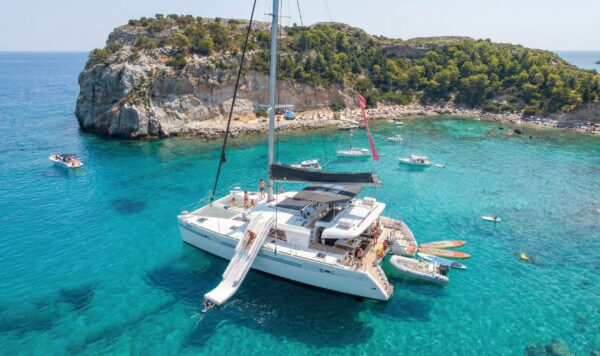
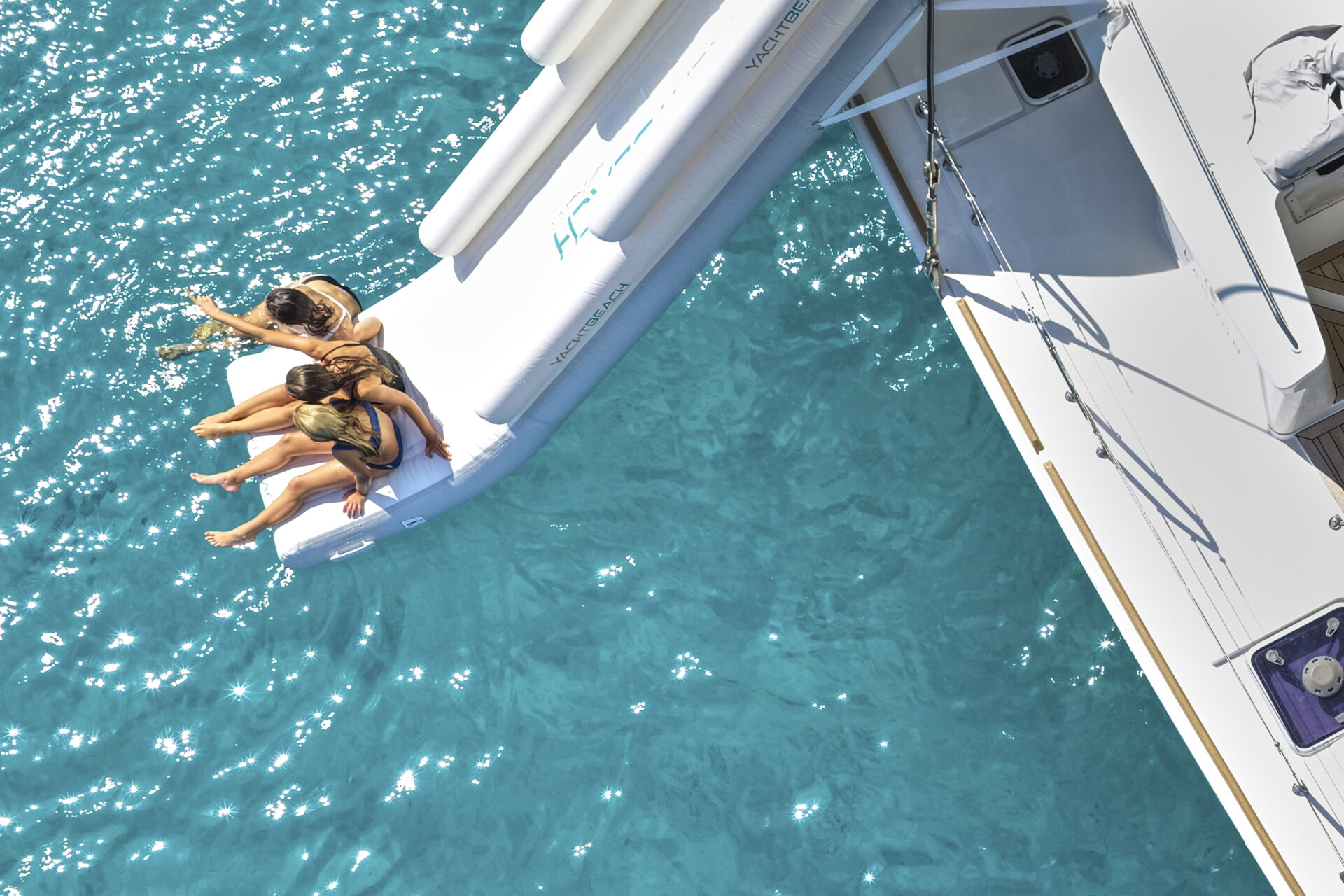
I run DanEri’s Rhodes base, and the question I hear at the marina before almost every cruise is the same one: “will the water be warm enough?” Rhodes has a happy answer. Sitting down in the Dodecanese, off the warm Turkish coast, its sea runs a touch warmer for longer than most of the Aegean — the swimming season here stretches well into November. Here is exactly what to expect, month by month, and which coast to pick on a windy day.
The sea around Rhodes is warmest in August at about 26°C (79°F), nudging 27°C in the warmest spells, with September a close second. It’s comfortable for swimming from late May right through November — longer than most Greek islands — sitting above about 21°C. The coldest water is in February at around 16°C (61°F). For warm water with thinner crowds, September is the sweet spot.
Rhodes sea temperature, month by month
Tap any month to see how warm the water is and whether it’s a swimming month.
Written by Captain George Bantis, who runs DanEri’s Rhodes base and sails the east coast most mornings in season, using long-term sea-surface-temperature averages for the Dodecanese cross-checked against what we record at the swim stops. Figures are typical monthly averages and vary a little year to year and between the sheltered east coast and the windier west.
Rhodes Sea Temperature Month by Month
These are the typical average sea-surface temperatures around Rhodes. The warmest water arrives in August and September because the sea spends all summer absorbing heat and releases it slowly — and because Rhodes sits so far south-east, it holds that warmth later into autumn than the rest of Greece.
| Month | Avg sea temp | °F | Swimming verdict |
|---|---|---|---|
| January | 17°C | 63°F | Cold — wetsuit for anything beyond a quick dip |
| February | 16°C | 61°F | Coldest of the year — wetsuit weather |
| March | 16°C | 61°F | Cold — the sea hasn’t caught up with spring yet |
| April | 17°C | 63°F | Cool — brave swimmers only, keep it short |
| May | 20°C | 68°F | Refreshing — swimmable, a rash vest helps for longer snorkelling |
| June | 23°C | 73°F | Comfortable — proper swimming weather |
| July | 25°C | 77°F | Warm — easy all-day swimming |
| August | 26°C | 79°F | Warmest — ideal for long swims and the cave |
| September | 25°C | 77°F | Warm — the sweet spot: warm sea, thinner crowds |
| October | 23°C | 73°F | Comfortable — still a lovely swimming month |
| November | 21°C | 70°F | Refreshing — still swimmable, the Dodecanese bonus month |
| December | 18°C | 64°F | Cool — brief dips, retreating toward winter |
What Counts as “Warm Enough”?
Comfort is personal, but there’s a rough scale most swimmers agree on. Below about 18°C the sea is bracing and you won’t linger without a wetsuit. From 19 to 21°C it’s refreshing — fine for a swim, but a rash vest extends your comfort if you’re snorkelling. From 22°C it’s genuinely comfortable, and from 25°C it’s warm enough to stay in as long as you like, which is what makes the swim-through cave at Traganou and the long stop at Anthony Quinn so good in late summer.
Why the Sea Is Warmest in Late Summer, Not Midsummer
Water holds heat far longer than air does. Through spring the sun warms the land quickly while the sea lags behind, which is why a hot 29°C day in May can still sit over a cool 20°C sea. By August the water has had months to absorb that heat, so it peaks late — and Rhodes, tucked into the warm south-east corner of the Aegean, cools more slowly than the rest of Greece, staying pleasant deep into autumn. It’s the best argument for an early-autumn trip: the air has eased off, but the sea is still holding summer.
The sea (teal) trails the air (gold) by a month or two — coolest in late winter, warmest in late summer, and still swimmable around 21°C in November when most of Greece has cooled.
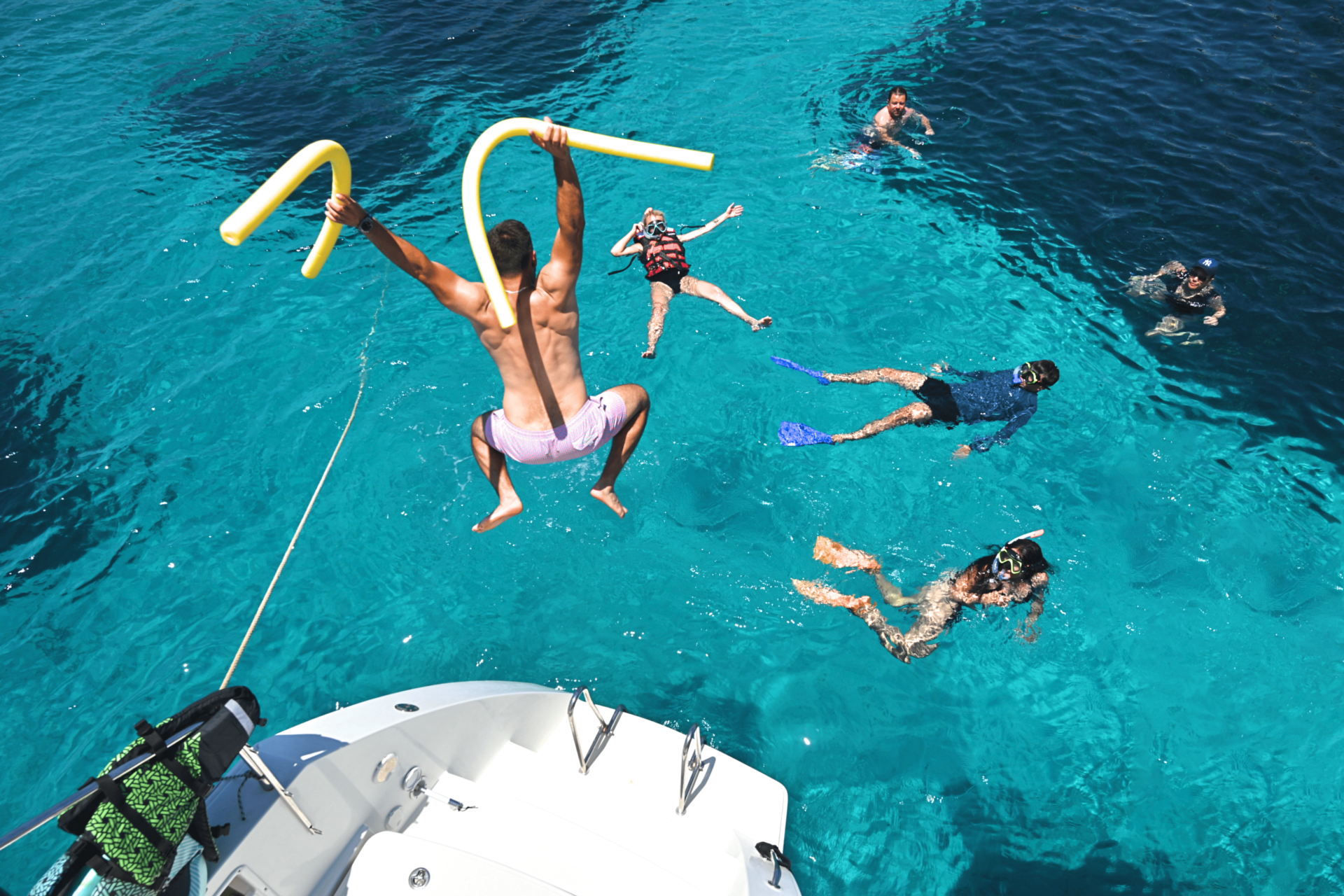
Late summer holds the warmest water of the year — ideal for the long anchored swims and the cave the east-coast day is built around.
East Coast vs West Coast
Rhodes has two very different seas, and on a windy day the choice matters. The east coast — where our cruises run, past Anthony Quinn Bay, Ladiko and the Traganou cave — faces away from the prevailing northwesterly meltemi, so it stays warmer, calmer and clearer through the summer. The west coast around Ialysos catches that wind head-on; it’s a degree or two cooler, choppier, and beloved by windsurfers for exactly that reason. If the forecast looks breezy, head east.
What This Means for Your Cruise
Sea temperature is really about how long you’ll want to be in the water, and that shapes which day to book. From June to September the water is warm enough that a full day along the east coast — several anchored swims, snorkelling and the swim-through cave at Traganou — is effortless; this is peak swimming season. In May, October and November the midday sea is at its warmest, so a daytime cruise gives you far more comfortable swim time than an evening sail. Whenever you come, we read the wind each morning and pick the calmest, clearest bays of the day. For the fuller picture on weather, wind and crowds, see our month-by-month guide to the best time to cruise Rhodes, and for the coves you can only reach by sea, our guide to the beaches only a boat can reach.