Search for the Blue Lagoon in Cyprus and you will find two different places wearing the same name. One is a sheltered turquoise bay at Cape Greco, between Ayia Napa and Protaras on the island’s south-east tip. The other is a wild, horseshoe-shaped inlet on the Akamas Peninsula in the far west, reached by boat from the little harbour of Latchi. Both have the impossibly clear, swimming-pool water the photos promise, and both are best reached the same way — by boat, because neither has a road a normal car can use. This guide explains the difference, then walks through the boat trips to each: departure points, durations, realistic 2026 prices, what is included and when to go. To plan a catamaran day on the water, start with the Cyprus cruises page or the island-wide Cyprus boat trips guide.
The Two Blue Lagoons of Cyprus
First, make sure you are booking the right one. The Cape Greco Blue Lagoon sits between Ayia Napa and Protaras, minutes offshore from two busy resort towns. It is the easy one: short boat rides, many departures a day, warm sheltered water and the famous Cavo Greco sea caves on the way. The Akamas Blue Lagoon lies on the north-west coast inside the Akamas National Park, about 50 kilometres north of Paphos. It is the wild one: a small horseshoe inlet around 200 metres across, fringed by low limestone cliffs, with no beach, no facilities and no paved road — you arrive by boat from Latchi or by a genuine 4x4 track, and you swim straight off the boat.
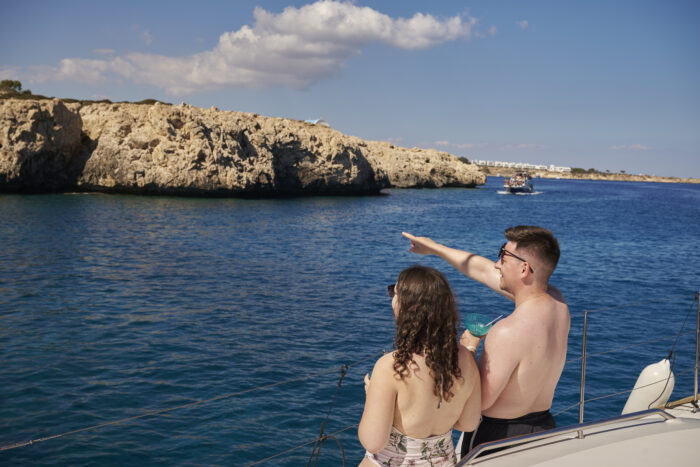
Two lagoons, one colour: water so clear the boat seems to float on air.
Staying in Ayia Napa, Protaras, Larnaca or Nicosia — you want the Cape Greco lagoon, a 20 to 35 minute sail from Ayia Napa. Staying in Paphos, Coral Bay or Polis — you want the Akamas lagoon, reached by boat from Latchi. They are a three-hour drive apart, so pick the one on your side of the island.
Blue Lagoon Boat Trips from Ayia Napa & Protaras
The Cape Greco Blue Lagoon is the highlight of almost every cruise on the south-east coast. Boats leave from Ayia Napa Harbour and the newer Ayia Napa Marina, with some also boarding at Protaras and Pernera. The lagoon sits about 8 to 10 nautical miles east of the marina — roughly 20 to 35 minutes each way — and the classic route passes the white cliffs and sea caves of Cavo Greco before anchoring in the turquoise shallows, often with a second stop at pretty Konnos Bay. Lucky mornings even bring a sea turtle past the boat. Because the distances are short, most of the day is spent swimming and snorkelling rather than travelling — the full picture of routes and boats is in our Ayia Napa boat trips guide.
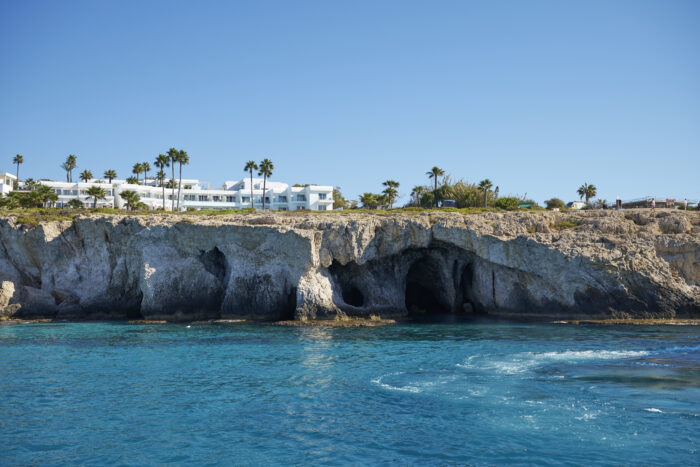
From Ayia Napa the lagoon is minutes offshore — the sea caves come first.
Typical 2026 market prices per adult — a guide, not a quote. A half-day cruise of about 3 to 4 hours with the sea caves and a long lagoon swim stop runs around 20 to 30 euro. A full-day luxury catamaran of about 5 to 6 hours with cooked lunch, open bar and snorkelling gear starts from about 25 euro and rises to around 55 euro with the boat and season. A private charter puts the whole catamaran on your schedule — the way to have the lagoon at its quietest, early or late. Compare private charter prices in Ayia Napa. On a typical shared cruise you get 40 to 60 minutes anchored in the lagoon itself, and noticeably longer on the full-day catamarans.
The Blue Lagoon, as Guests Tell It
Prices and sailing times only get you so far — here is what the day actually feels like, in the words of travellers who sailed the Blue Lagoon & Cavo Greco cruise from Ayia Napa in the 2025 season. Every quote below is from a verified Tripadvisor review of that cruise.
The worry every traveller carries to a “blue lagoon” anywhere in the world is that the photos oversell it. Janne, who sailed in late September, boarded with exactly that doubt — and left with the opposite story:
“There was plenty of space on board, so it never felt crowded, and we had several beautiful swim stops in crystal clear water. One stop in particular stood out — a place in the so-called Blue Lagoon that actually lived up to its name. This is the first trip we’ve ever been on that advertised a blue lagoon and actually delivered water that was stunningly turquoise and crystal clear.”
What surprises guests most is not the colour of the water — they came for that — but how uncrowded the day feels next to the big excursion boats anchored nearby. Victoria, who sailed the same month, counted heads:
“One of the best cruises we have been on. We were only 22 on board including the crew. Plenty of space on the boat, good food and unlimited drinks. Highly recommend.”
Jacqueline called it “a relaxed excursion, great swimming stops” and “a trip without roaring crowds” — and noted the galley quietly cooked around her gluten-free diet. Steve, comparing it with the alternatives in the harbour, put it more bluntly: “much better than the big boat alternatives.”
Then there is lunch, which guests describe less like boat catering and more like a taverna that happens to float. Maurizio wrote home about the menu itself:
“Excellent barley pasta with shrimp and clams, mussels and fresh salads! Local wine and typical cheeses. The staff on board did everything to please us! All this on a very spacious catamaran. It is really worth it!”
And Lorenzo, three days into a Cyprus holiday with friends, left with two names instead of a landmark:
“A lot of fun, very nice food and plenty of drinks. The must of this experience was the hosts! George is the cook and Ioanna is the best hostess ever!”
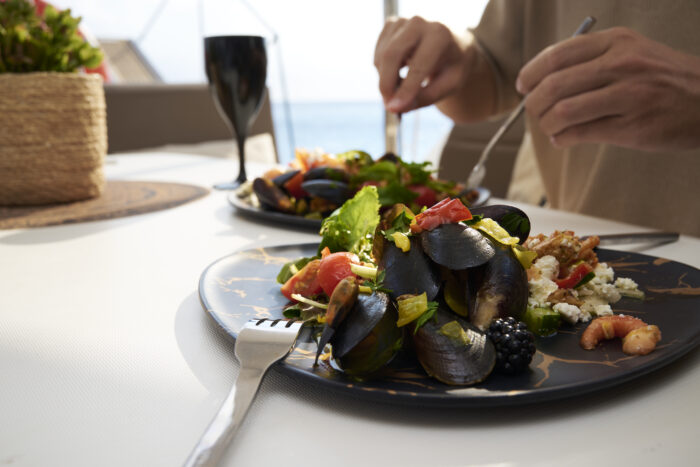
George cooks, Ioanna hosts — the lunch guests keep naming in their reviews.
Blue Lagoon Boat Trips from Latchi (Akamas)
On the west side, boats to the Akamas Blue Lagoon leave from Latchi harbour, a small fishing port five minutes from Polis and about 45 minutes by car north of Paphos. The ride out takes 25 to 45 minutes along a beautiful stretch of protected coast, passing the Baths of Aphrodite and the islet chapel of St George, before the boat anchors in the lagoon for 60 to 90 minutes of swimming and snorkelling. Most trips last 3 to 4 hours in total and run from April to October. Expect around 25 to 40 euro per adult on the standard boats, 60 to 80 euro on the smaller catamarans, and roughly 350 to 600 euro for a half-day private charter for a small group, with children usually at half price. Book ahead for July and August — in shoulder season you can often walk up on the day. The wider west-coast picture, including glass-bottom boats and the turtle coast, is in our Paphos boat trips guide.
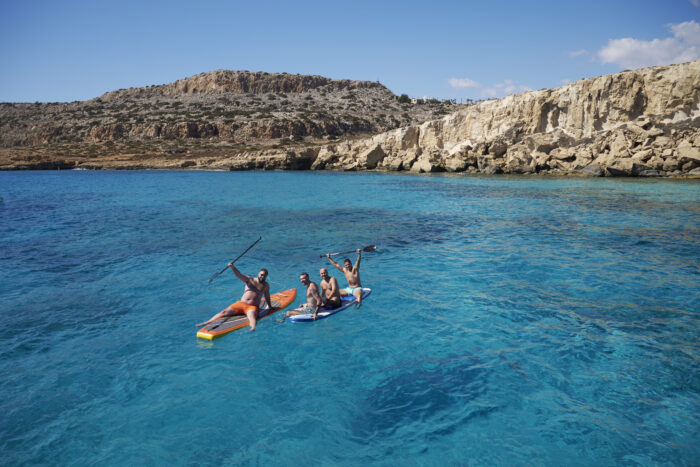
The Akamas lagoon has no beach and no crowds ashore — you swim straight off the boat.
The land route to the Akamas lagoon is a rough, corrugated dirt track that needs a genuine high-clearance 4x4 — most Paphos rental contracts exclude damage on the Akamas road, and ordinary SUVs are regularly hurt on it. Unless off-roading is the point of your day, the boat from Latchi is the easy, cheaper answer.
What It’s Like in the Water
Neither Blue Lagoon is a beach. At both, the boat anchors and you enter the water from the deck or the swim ladder — a jump for the brave, steps for everyone else. The edges are shallow, around 1 to 2 metres over pale limestone and sand, which is what produces that luminous turquoise, while the centre drops to 5 to 8 metres of glass-clear water where fish are visible far below the hull without a mask. Bream and damselfish are the regulars, and on the Cape Greco side snorkellers sometimes share the water with a passing turtle. One honest difference: the Akamas current keeps the western lagoon a couple of degrees cooler than the open sea, around 22 to 24°C in summer, while the shallow south-east coast runs warmer at 26 to 28°C in high season.
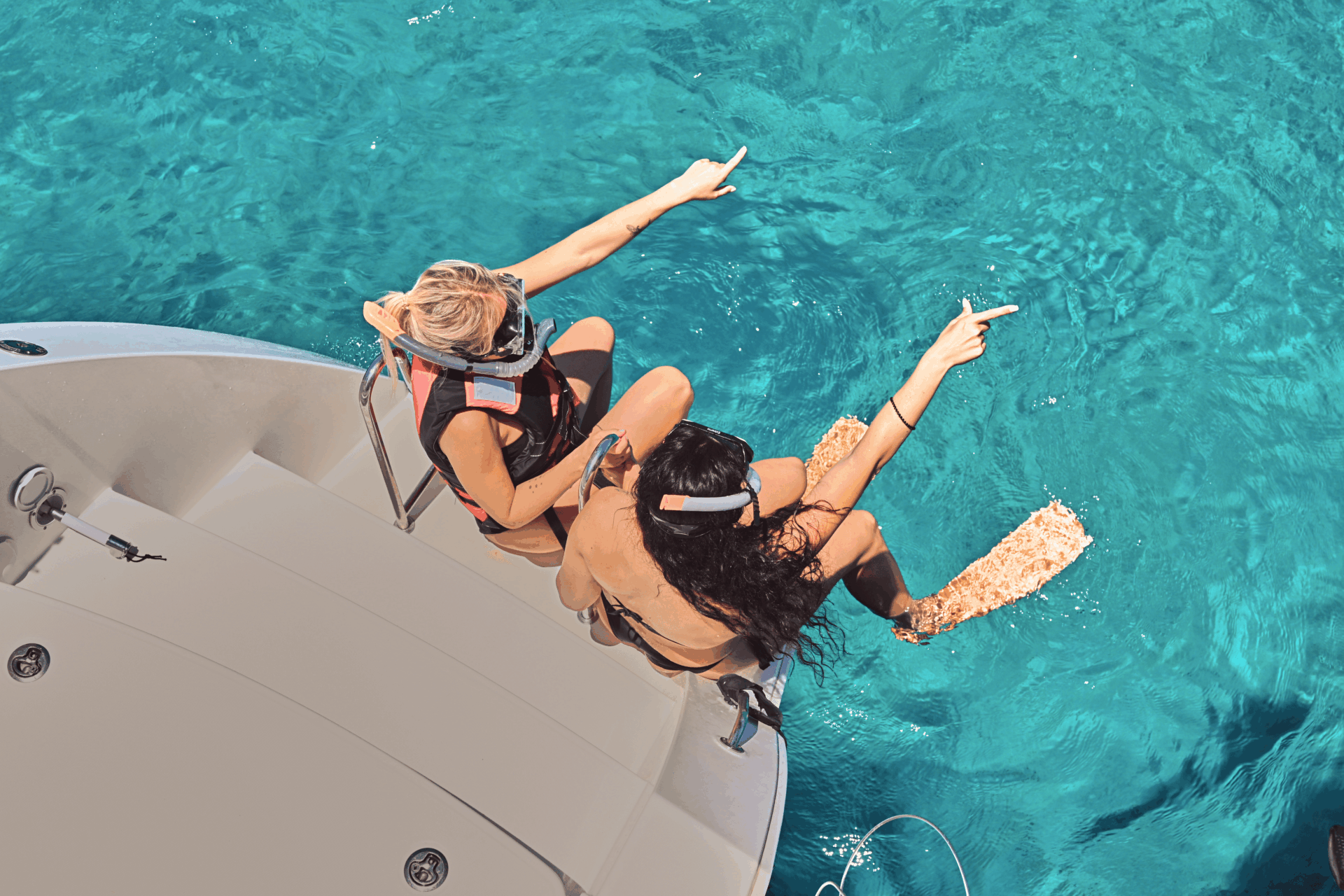
Masks on: the lagoon’s clarity makes even a first snorkel feel like flying.
Non-swimmers are not left out. The shallow edges are calm enough to wade with a noodle or vest, the crew keeps an eye on the water, and glass-bottom boats on both coasts let you see the seabed without getting wet at all. Confident swimmers should bring a mask — the underwater light through that water is the whole point.
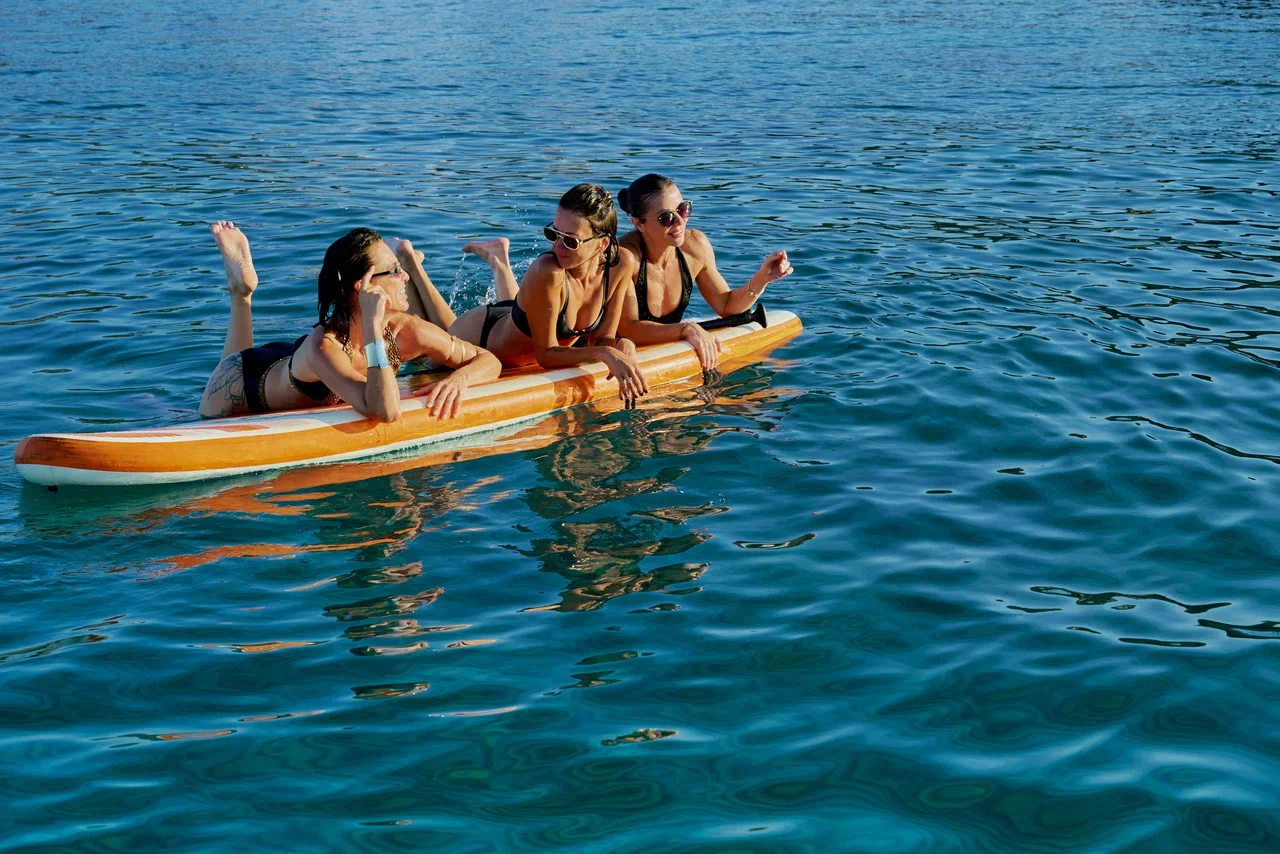
Shallow edges for waders, deep clear centre for divers — the lagoon suits both.
What’s Included & What to Bring
Most Blue Lagoon cruises include free use of masks and snorkels and an onboard bar, and the full-day catamarans add a cooked lunch and open bar. At the Akamas lagoon there are no facilities at all — no toilets, no shop, no shade ashore — so everything you need comes on the boat with you. Bring swimwear, a towel, a hat and high-factor sun cream, swim shoes for the rocky edges, drinking water and a waterproof pouch for your phone. Both lagoons sit in protected areas, so skip single-use plastics and take everything back aboard. A little cash covers bar extras and a tip for the crew.
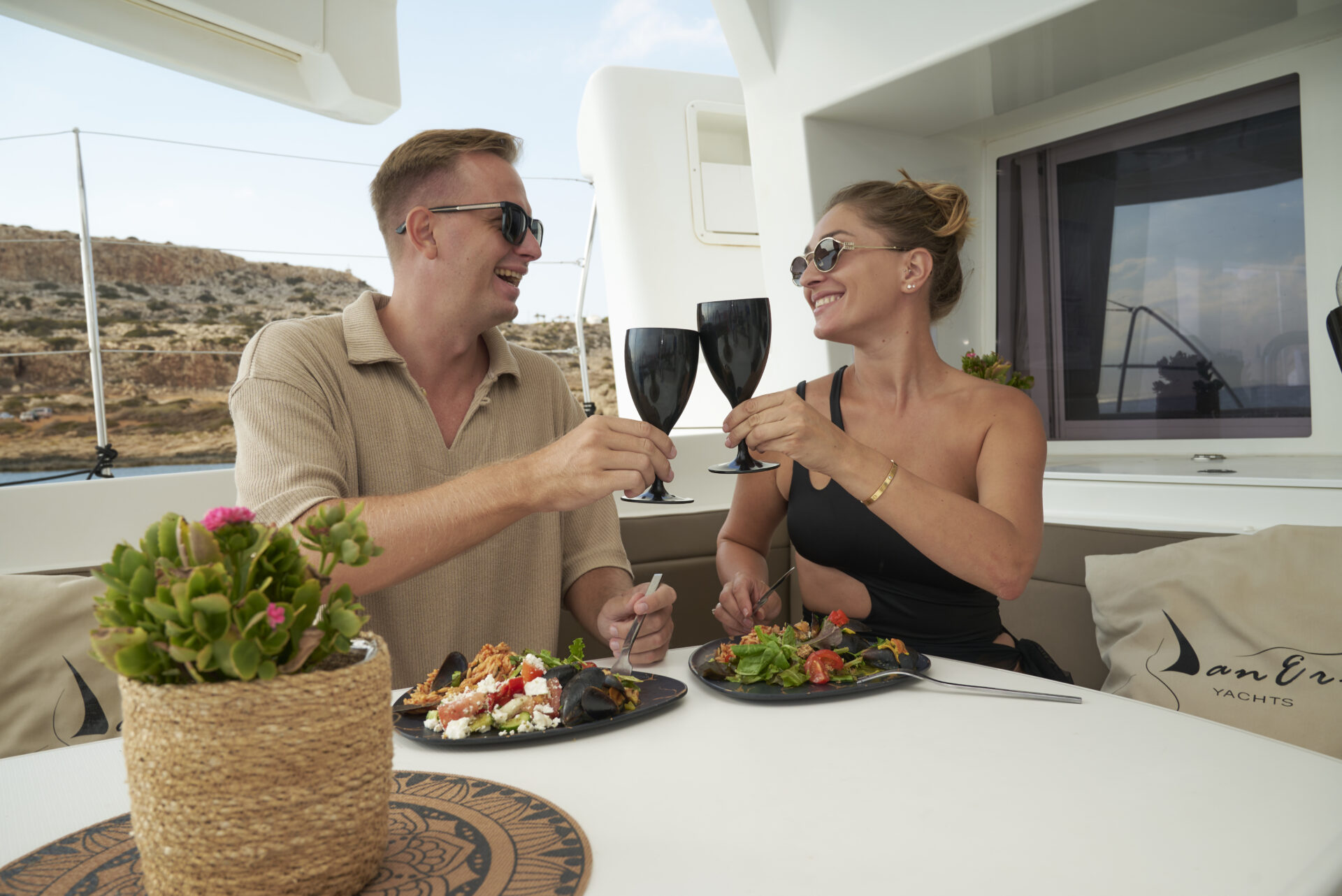
On the full-day catamarans, lunch and drinks come with the day.
Best Time for a Blue Lagoon Trip
The boats run from April to October on the Akamas side, and on the warmer south-east coast the season stretches from late May into November. The sweet spots are June, September and early October — warm water, long days and thinner crowds than the July–August peak, when the Cape Greco lagoon in particular is busiest between about 10am and 3pm. If you want the water to yourself, take the first morning departure, a late-afternoon sail or a private charter. Check the month-by-month Cyprus sea temperature guide before you pick a date.
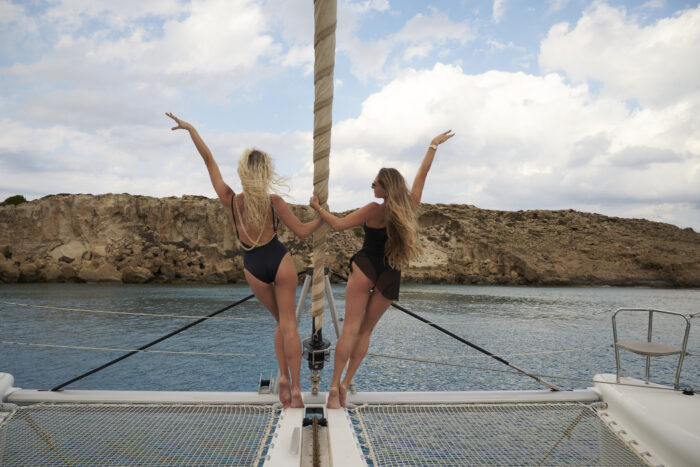
Early and late departures trade the crowds for the best light of the day.
Why See the Blue Lagoon by Catamaran
Any boat gets you there, but a catamaran changes how the lagoon feels. Two hulls make a wide, stable deck that barely moves at anchor, a shallow draft slides close in over the turquoise shallows, and there is real space — shaded and open — to spread out between swims instead of queuing at a speedboat rail. DanEri’s luxury catamarans sail the south-east coast from Ayia Napa, pairing the Cavo Greco sea caves with a long Blue Lagoon swim stop, with lunch cooked on board, snorkelling gear and a crew that handles everything. Full-day, sunset and private cruises are on the Cyprus cruises page.
“The ride felt smooth and stable, which made it relaxing even for those who usually get seasick. The crew was friendly, attentive, and always ready to help, sharing interesting details about the places we visited.”
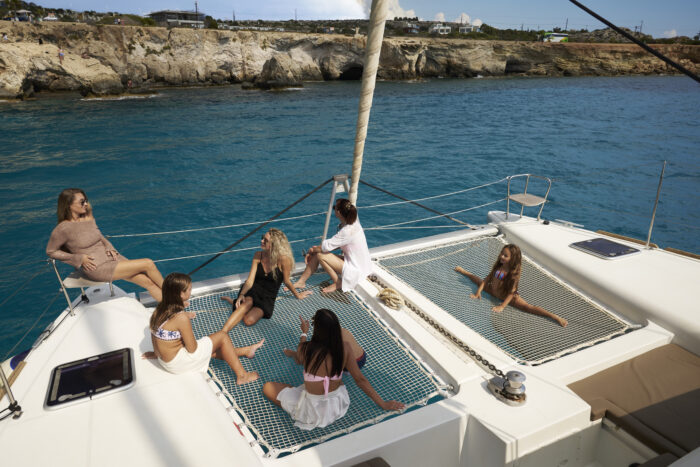
At anchor in the lagoon, a catamaran’s deck becomes the best seat in Cyprus.