Crete is so big that travellers often plan it like a small country — and that is the right instinct. It is over 250 kilometres long, splits naturally into four regions, and you could spend a fortnight here and still leave things undone. This guide is built to make that easy: a region-by-region map of the island’s best experiences, the beaches everyone wants and the ones only a boat reaches, the ancient sites, the gorges and the food — with honest notes on how many days you really need and when to come.
Crete divides into four regional units, west to east: Chania, Rethymno, Heraklion and Lasithi. Most visitors base themselves in one or two and day-trip out. We’ve grouped things to do by type so you can build your own days — and flagged which experiences are best reached from the water, because that’s the side of Crete most people miss.
The Beaches & Lagoons
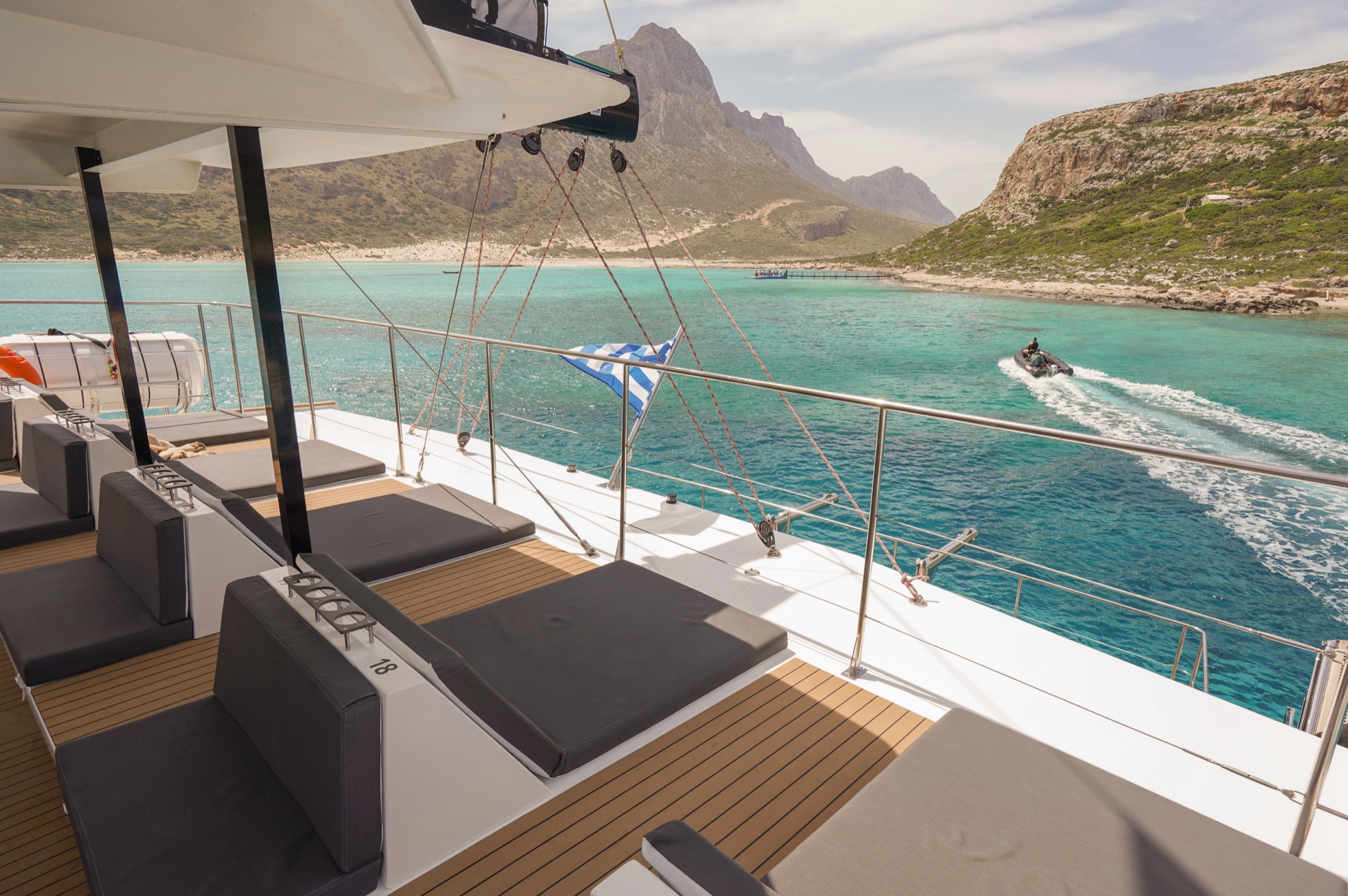
Crete has the most famous beaches in Greece, and several of them are genuine bucket-list sights. In the far west, the Balos lagoon and the islet of Gramvousa with its Venetian fortress are the showpiece — shallow turquoise water over white sand, reached most comfortably by boat from Kissamos. Down the southwest coast, Elafonisi is the pink-sand lagoon everyone photographs, and Falassarna is the west coast’s great sunset beach. Near Chania, Seitan Limania is a dramatic fjord-like cove, and on the south coast of Rethymno, palm-fringed Preveli sits where a river meets the Libyan Sea. Out east, the palm forest of Vai is unlike anywhere else in Europe.
The honest truth about the headline beaches is that they get busy and the road access is often slow and rough. Balos in particular involves a long unpaved track and a walk down — which is exactly why arriving by sea is the calmer, cooler way to do it. If you’re weighing the two stars against each other, our Elafonisi or Balos guide settles which fits your trip.
Balos lagoon — the most photographed beach in Crete, and far calmer reached by boat from Kissamos.
See Crete From the Water
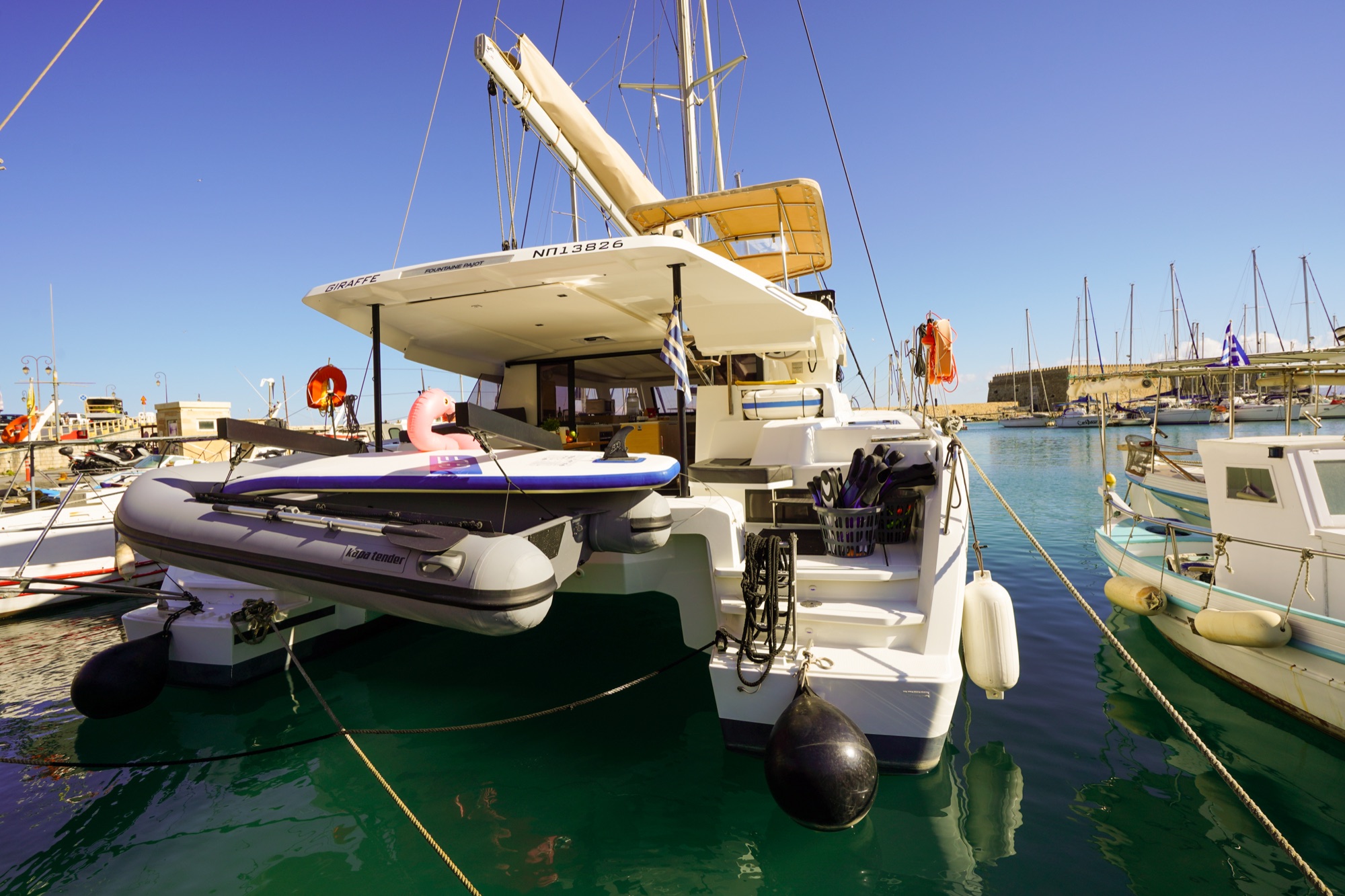
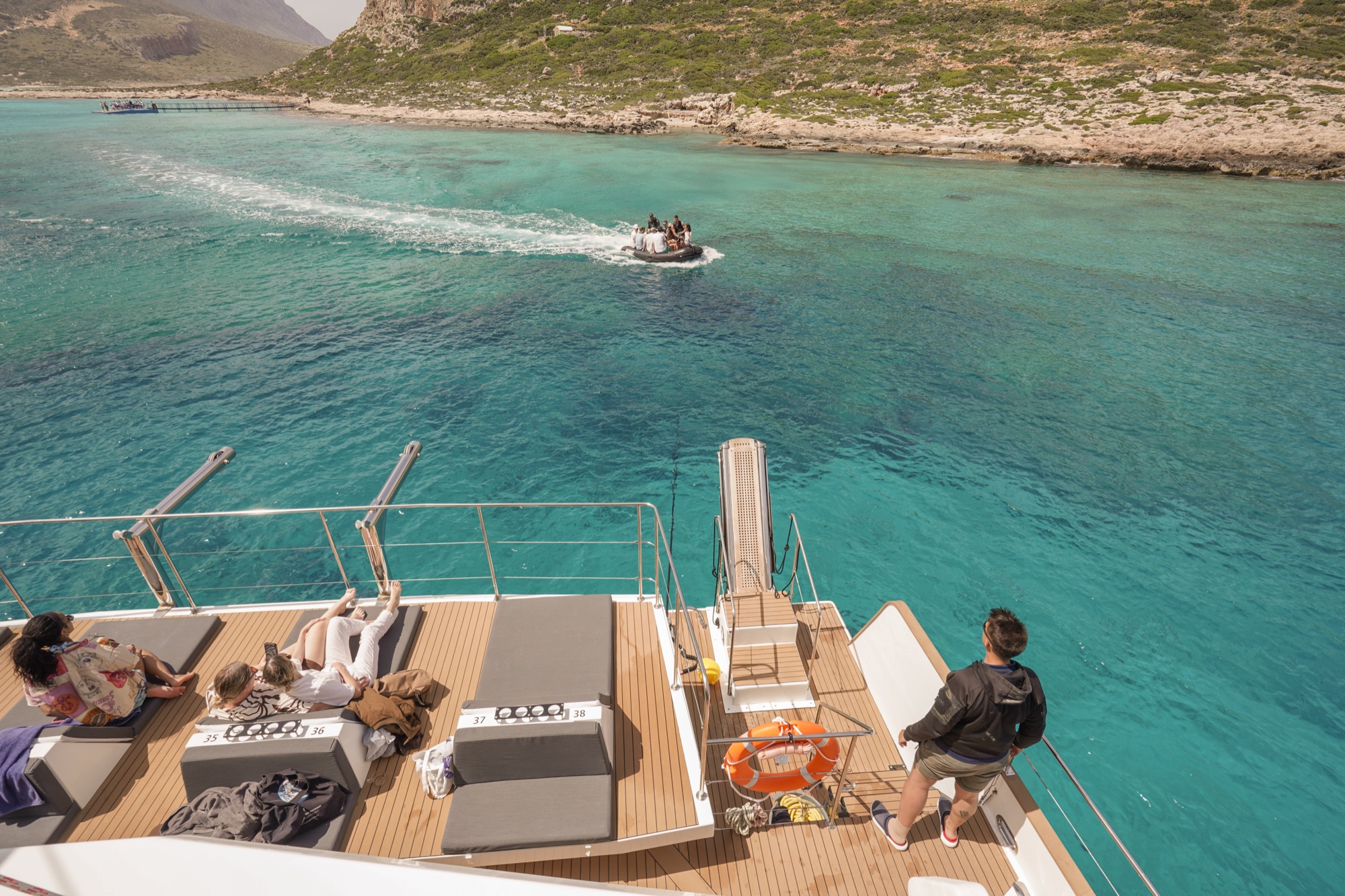
If you only add one new thing to a Crete itinerary, make it a day at sea. The north coast is dotted with coves, sea caves and islets you simply cannot reach by car, and the water here is the warmest in Greece from late spring to autumn. A catamaran cruise turns the famous sights into a relaxed day — swimming and snorkelling stops, lunch on board, and the coastline from the angle the postcards are shot. Depending on where you’re based, you can sail to Balos & Gramvousa from Kissamos, explore the bays around the Chania coast, cruise to Dia Island from Heraklion, or run along the north coast from Rethymno.
For the full five-port comparison, see the complete Chania boat trips guide.
For the single best day on the water, the Balos & Gramvousa cruise is the island’s most spectacular. Not sure which sailing fits your group and base? Our cruise finder matches you in a minute, and the sea temperature guide tells you when the water is warm enough to swim.
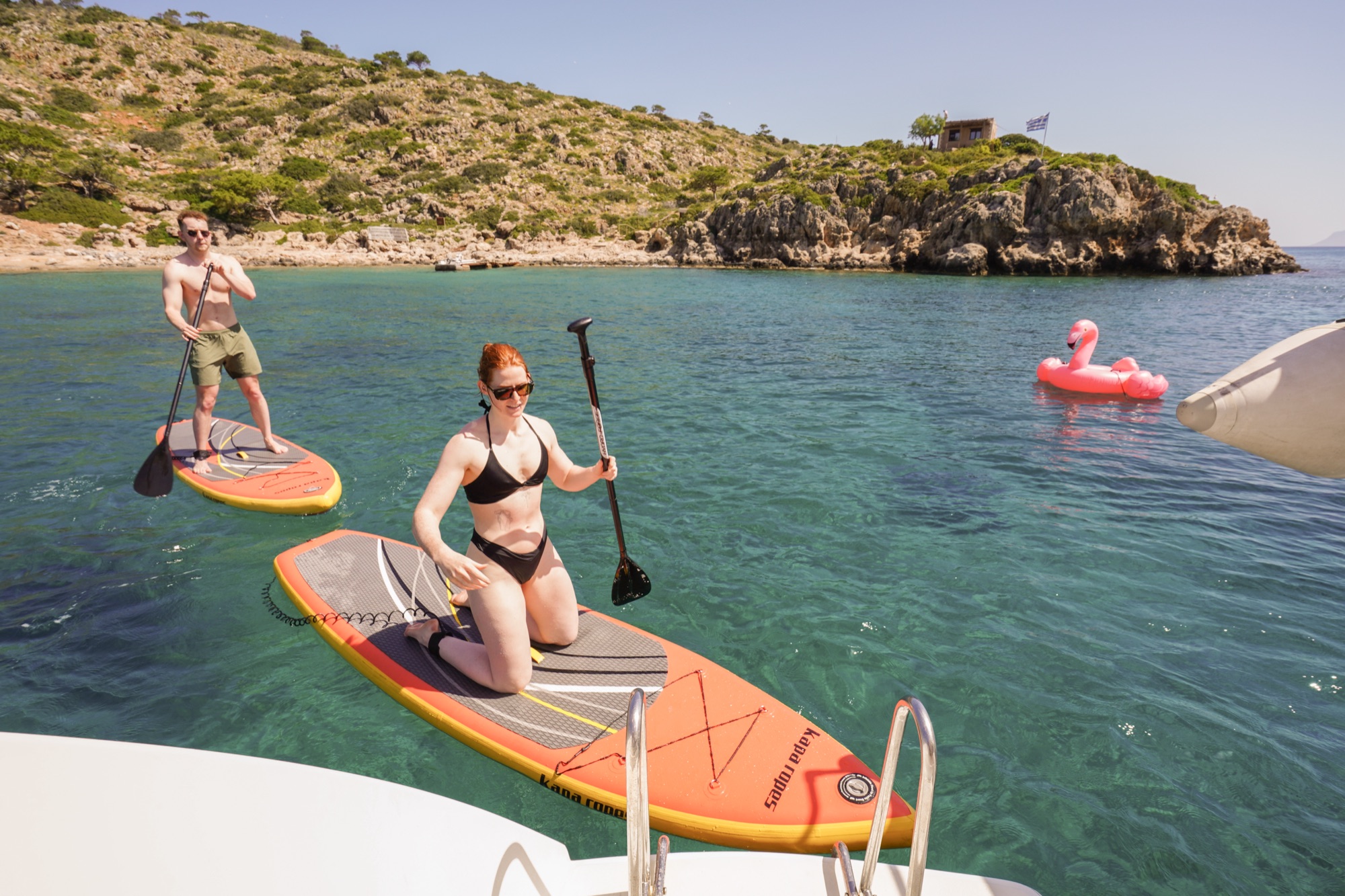
Snorkelling, paddleboards and long swim stops — the side of Crete most visitors miss.
Some of Crete’s finest swims have no road at all — the coves around Gramvousa, the sea caves near Chania’s Agioi Theodoroi islet, and the clear water off Spinalonga in the east. A cruise is the only way to string several together in a day.
Ancient Crete: Minoan Palaces & Fortresses
Crete is the cradle of Europe’s first great civilisation, the Bronze-Age Minoans. The unmissable site is the palace of Knossos just outside Heraklion — the legendary labyrinth of King Minos, partly reconstructed and endlessly atmospheric. Pair it with the Heraklion Archaeological Museum, which holds the actual frescoes and the enigmatic Phaistos Disc, then see the quieter, unreconstructed palace of Phaistos on the southern plain. In the east, the islet of Spinalonga off Elounda — a Venetian sea fortress that later became Greece’s last leper colony — is one of the most moving half-days on the island, and it’s reached by short boat hop.
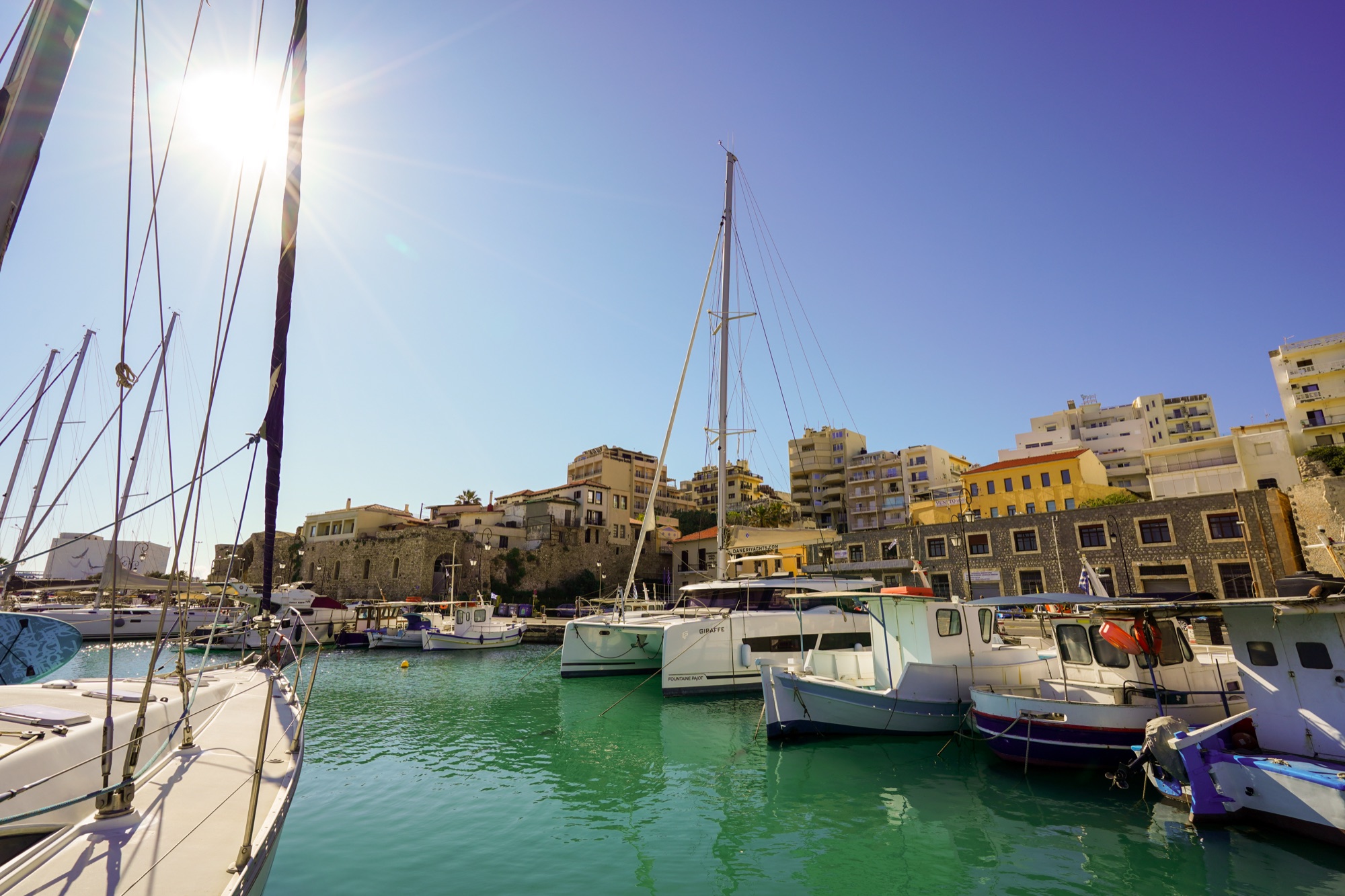
Heraklion’s waterfront — the practical base for Knossos, the Archaeological Museum and the east.
Gorges & Mountains
Inland Crete is mountainous and wild. The classic walk is the Samaria Gorge in the White Mountains of Chania — a 16-kilometre descent that ends at the Libyan Sea, where you catch a boat onward along the coast. If a full day’s hike is too much, the shorter Imbros Gorge gives you the scenery in a few hours. For a gentler day, the Lasithi Plateau in the east is a ring of farming villages and old stone windmills, with the Dikteon (Psychro) Cave — mythological birthplace of Zeus — on its rim.
The Old Towns
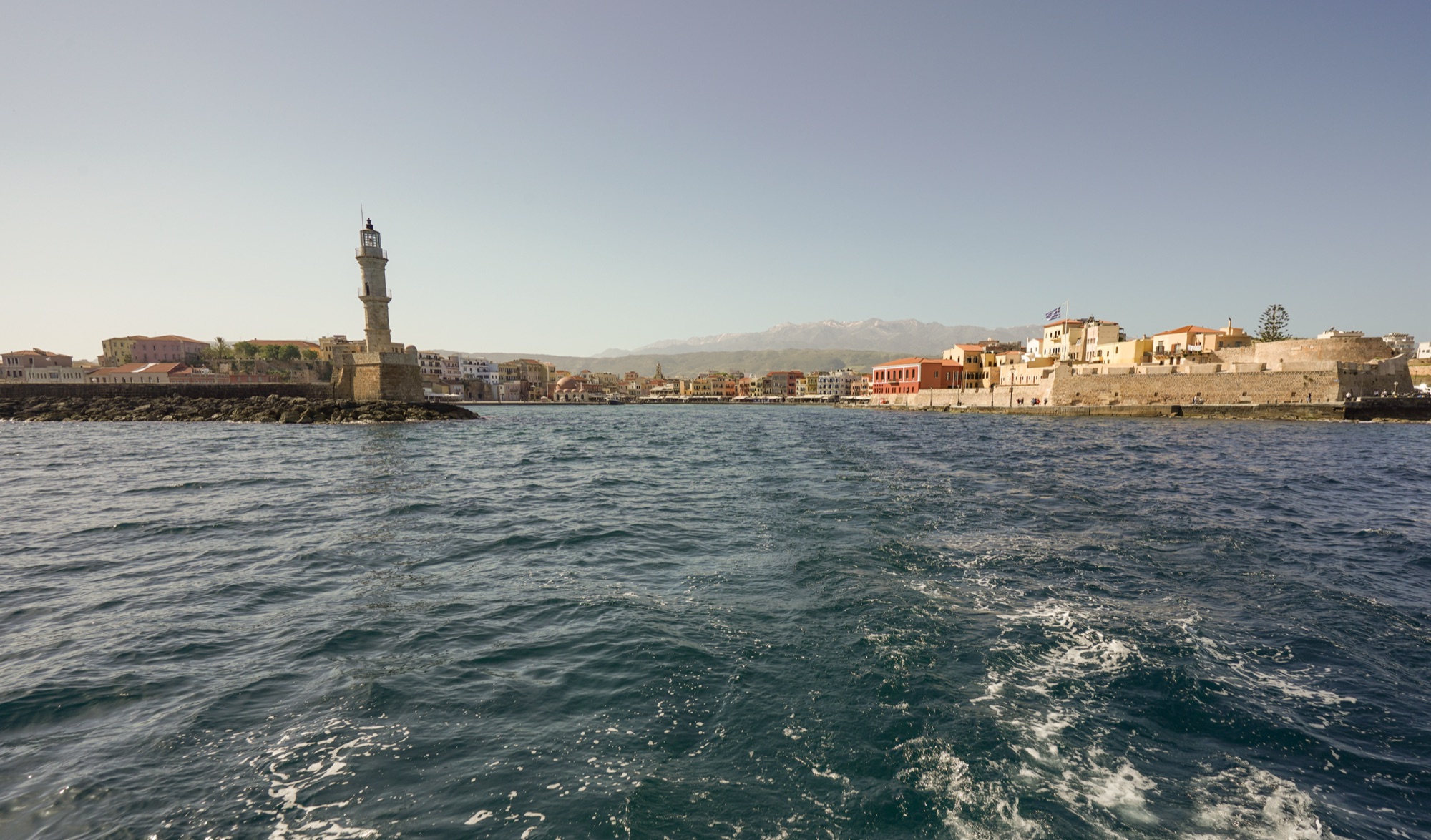
Crete’s three main cities each keep a beautiful historic core. Chania in the west has the island’s loveliest old quarter, a horseshoe of Venetian and Ottoman houses around a harbour with a lighthouse at its mouth — wonderful at dusk, and the launch point for cruises along the coast (see our guide to the Chania things to do by boat). Rethymno has the best-preserved old town, crowned by the huge Venetian Fortezza fortress. Heraklion, the capital, gathers around the Koules sea fortress, the Morosini (Lions) fountain and the museum — the practical base for Knossos and the east.
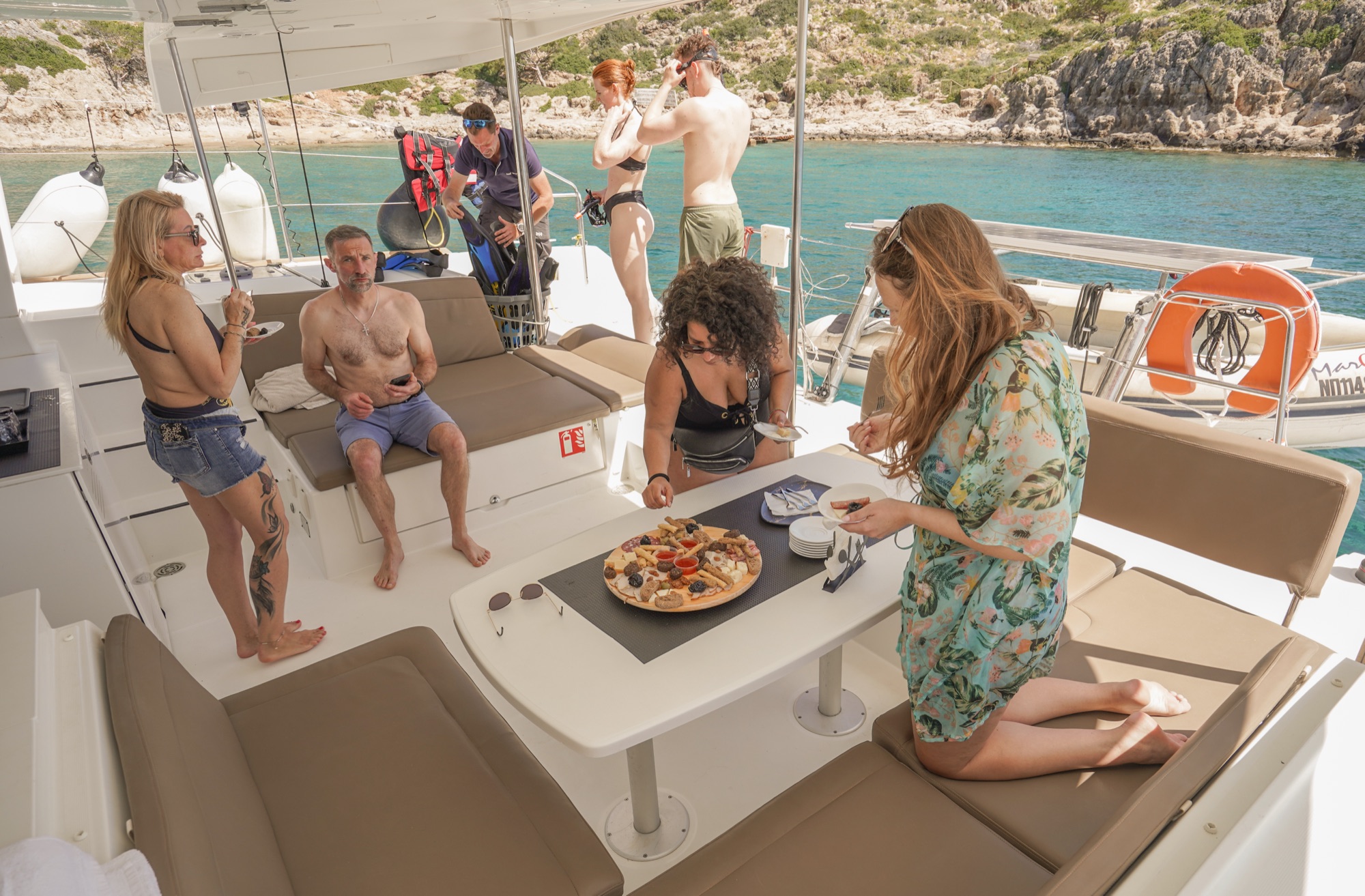
Crete’s old towns sit right on the water — many are the launch point for a cruise along the coast.
Cretan Food & Culture
Crete has its own celebrated cuisine, often cited as one of the healthiest in the world. Look for dakos (rusk with tomato and soft cheese), wild greens, slow-cooked lamb and goat, fresh seafood, the local cheeses graviera and mizithra, and Cretan honey. The drink of hospitality is raki (also called tsikoudia), poured at the end of nearly every meal. Beyond the tavernas, agrotourism is strong here — village cooking classes, mountain monasteries, olive-oil and honey farms — and a sunset dinner after a day at sea is one of the island’s simple pleasures.
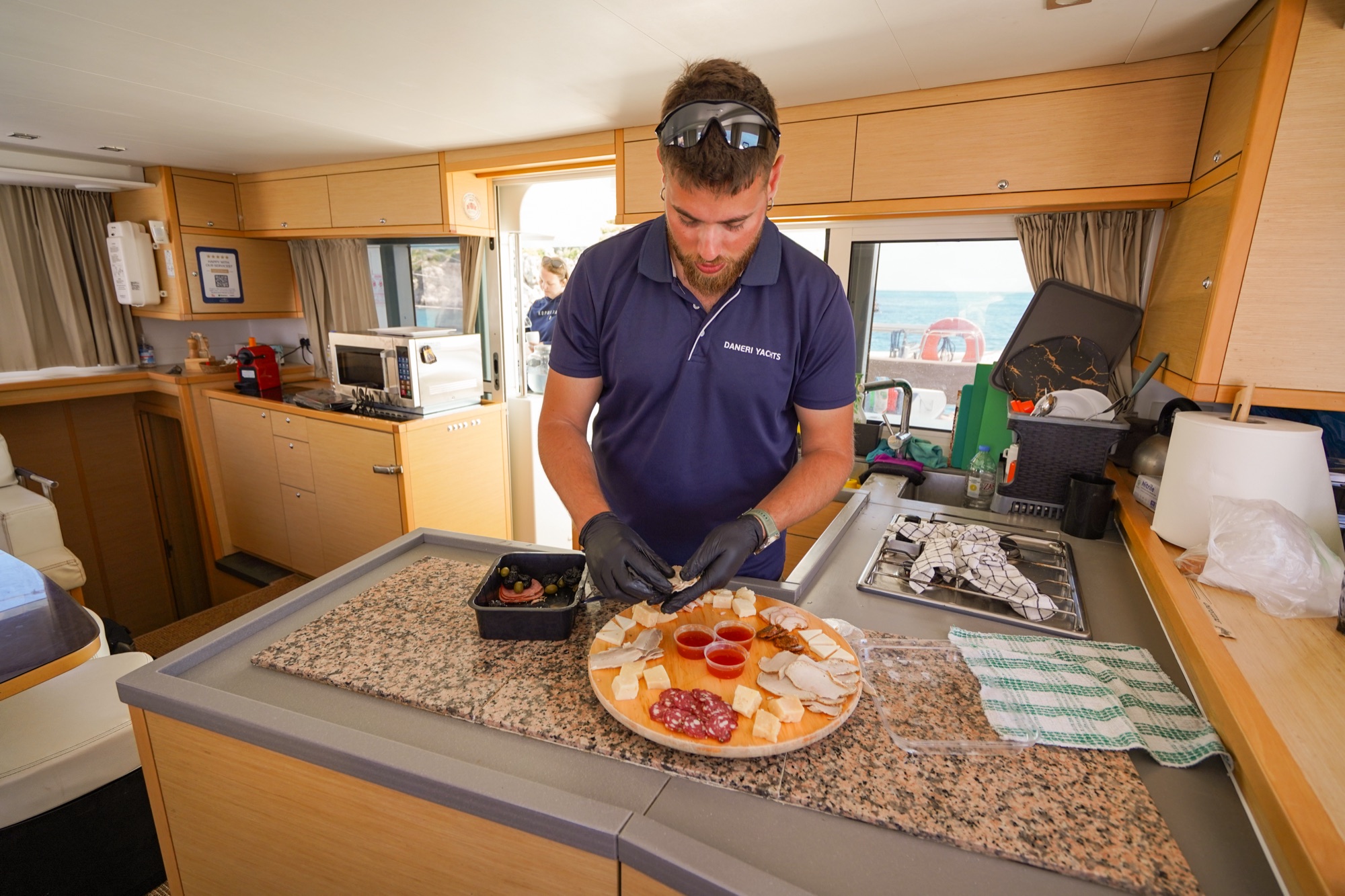
Cretan flavours at sea — meze, local cheeses and raki are part of every cruise.
How Many Days Do You Need?
A long weekend lets you settle into one region — usually Chania or Heraklion — with one big day out. Five to seven days is the sweet spot: base in the west for Chania’s old town, Balos and a gorge, then move east for Knossos and Spinalonga. Ten days or more, and you can add the south coast, the Lasithi plateau and a couple of unhurried beach days. However long you have, build in at least one day on the water; it’s the experience visitors most often say they wish they’d done sooner.
1) A boat day to Balos & Gramvousa. 2) The old harbour of Chania at dusk. 3) Knossos plus the Heraklion museum. 4) A gorge walk (Samaria or Imbros). 5) A long Cretan lunch with raki. Plan the boat day around warm, calm water using the sea temperature guide, and pack with our catamaran packing list.
Best Time to Visit
Crete has the longest season in Greece. May, June, September and early October are the sweet spot — warm sea, long days and thinner crowds than midsummer. July and August are hottest and busiest, ideal for the water but warm for gorge walks. April and late October are lovely for towns, sites and hiking, though the sea is bracing for a long swim. Check the month-by-month Crete sea temperature guide before you pick your dates.
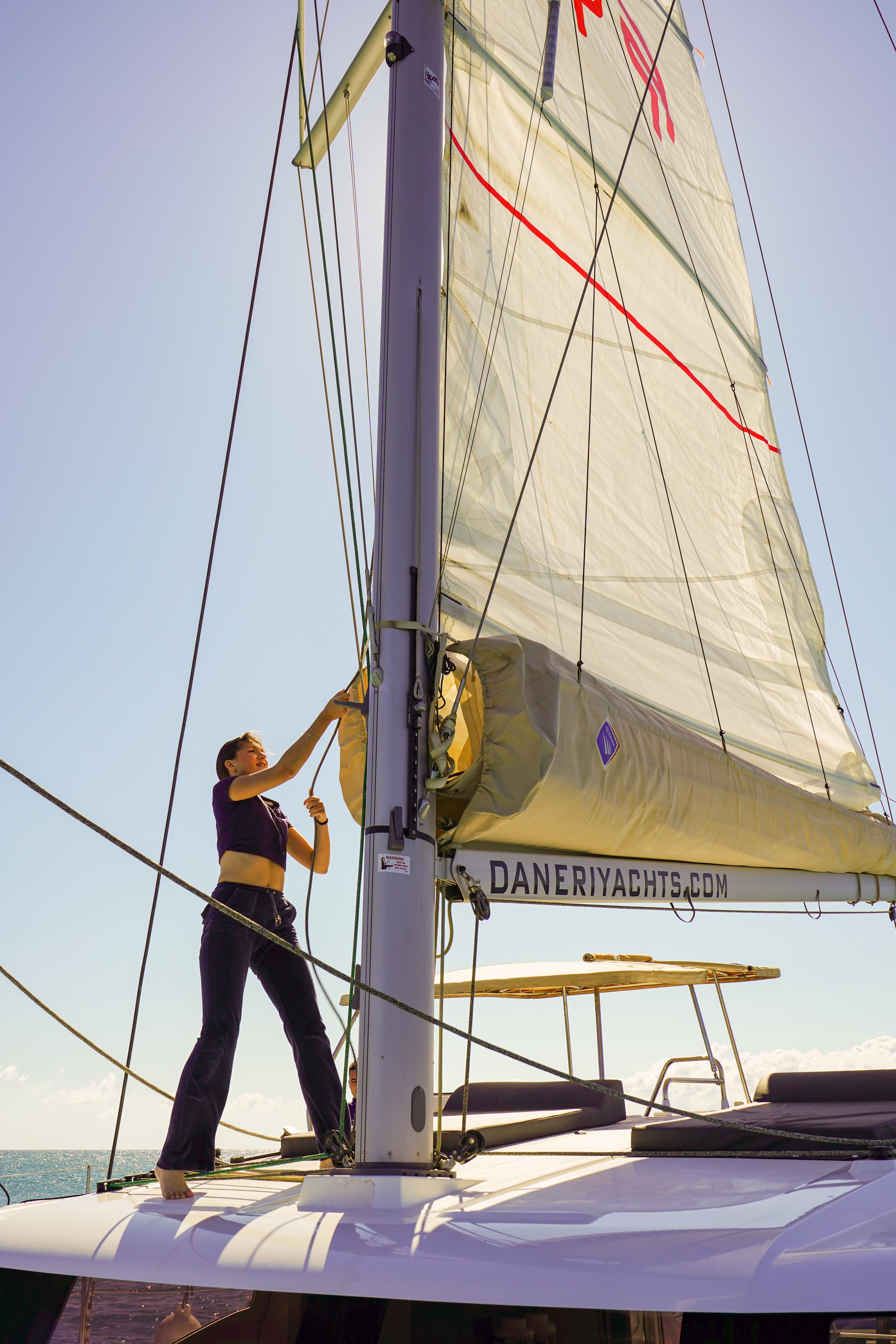
Late spring to autumn is prime sailing weather — build in at least one day on the water.